
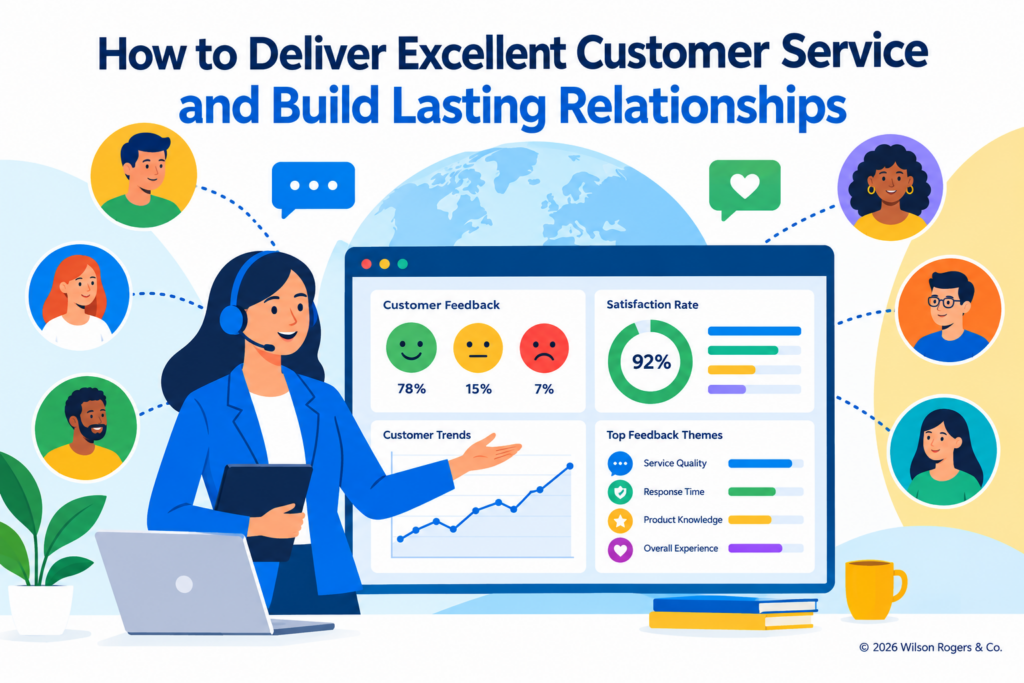
How to Deliver Excellent Customer Service and Build Lasting Relationships
Customer service plays an important role in business success. Whether you own a small business, manage a team, or work directly with customers, the quality of your interactions can influence your company’s reputation, customer loyalty, and long-term growth.
Excellent customer service goes beyond answering questions and resolving complaints. It involves understanding customer needs, communicating clearly, and creating positive experiences that encourage customers to return.
In this blog, we’ll explore the fundamentals of customer service, how to make a positive first impression, resources for improving service skills, and ways to measure customer satisfaction.
What Is Customer Service?
Customer service is the support and assistance a business provides before, during, and after a customer purchases a product or service. Its purpose is to answer questions, resolve problems, and ensure customers feel valued.
Effective customer service relies on several essential principles:
- Communication: Provide clear, accurate information and set realistic expectations.
- Empathy: Listen to concerns and respond with patience and understanding.
- Problem-solving: Identify issues and work toward practical solutions.
- Product knowledge: Understand your company’s offerings, policies, and procedures.
- Continuous improvement: Use customer feedback to identify opportunities for improvement.
Understanding these principles helps businesses deliver consistent service and build stronger customer relationships.
Who Should Be Responsible for Greeting Customers?
A customer’s first interaction with your business can shape their overall impression. Whether the greeting happens in person, over the phone, or online, customers should feel welcome and know where to turn for assistance.
Depending on your business, the person responsible may be a receptionist, customer service representative, sales associate, or another designated employee.
When selecting someone for this role, look for strong communication skills, a friendly demeanor, patience, and the ability to remain professional under pressure. Employees should also understand company policies and know when to refer questions to a manager.
Tips for making a positive first impression:
- Acknowledge customers promptly and greet them courteously.
- Ask how you can help and listen to their needs.
- Provide accurate information or connect them with the appropriate person.
- Remain professional, even during busy periods or difficult interactions.
For example, a simple greeting such as, “Welcome! How can I help you today?” can establish a friendly and professional tone.
Where Can You Find Customer Service Training Resources?
Customer service skills can be strengthened through professional training, reading, and practical experience.
Online Learning Platforms
- Coursera: Courses covering communication, customer experience, and business management.
- Udemy: Training in customer service fundamentals, complaint resolution, and communication.
- LinkedIn Learning: Professional development courses focused on customer relationships and service excellence.
Course availability and pricing vary by platform.
Books and Other Resources
Consider these books for additional insights:
- Delivering Happiness by Tony Hsieh explores company culture and customer experience.
- The Customer Rules by Lee Cockerell shares principles for creating positive customer experiences.
Webinars, podcasts, industry articles, and professional associations can also help business owners and employees stay informed about customer service practices.
Regular team training and discussions about real customer interactions can help turn these lessons into everyday habits.
How to Measure Customer Service Quality
Customer feedback helps businesses understand what they are doing well and where improvements are needed. Surveys and customer reviews provide useful information for evaluating satisfaction and identifying recurring concerns.
Why Customer Feedback Matters
Collecting feedback can help you:
- Measure customer satisfaction.
- Identify recurring complaints or service delays.
- Recognize employee strengths and training needs.
- Improve customer retention.
- Make informed decisions about service improvements.
Questions to Include in a Customer Survey
Keep surveys brief and easy to complete. Consider asking:
- How satisfied were you with your overall experience?
- Was our team professional and helpful?
- Did we resolve your questions or concerns?
- What could we do to improve your experience?
- How likely are you to recommend our business to others?
Rating-scale questions make results easier to compare, while open-ended questions allow customers to explain their experiences.
Tools for Gathering Feedback
Businesses can use several resources to collect and evaluate customer feedback:
- SurveyMonkey: Create surveys and analyze responses.
- Google Forms: Build simple customer satisfaction surveys.
- Trustpilot and Yelp: Review publicly shared customer experiences and identify potential service issues.
Collecting feedback is only the first step. Review the results, identify patterns, and make practical changes based on what customers tell you.
7 Practical Tips for Excellent Customer Service
Consistent customer service requires clear expectations and a commitment to meeting customer needs. These seven practices can help your business improve its approach.
- Listen to Customers
Give customers your attention and let them explain their concerns before offering a solution. Ask clarifying questions to make sure you understand the issue.
- Show Empathy and Stay Professional
Acknowledge customer frustrations without becoming defensive. A statement such as, “I understand why that would be frustrating. Let me see how I can help,” shows that you take their concerns seriously.
- Know Your Products, Services, and Policies
Employees should be prepared to answer questions accurately. If they do not know an answer, they should seek assistance rather than guess.
- Respond Promptly and Follow Through
Set reasonable response-time expectations, keep customers informed about delays, and honor commitments. If you promise an update, make sure you provide it.
- Resolve Complaints Effectively
Stay calm, identify the problem, explain available solutions, and involve a manager when necessary. Focus on resolving the issue rather than arguing over who is at fault.
- Personalize the Customer Experience
When appropriate, use customers’ stated preferences and service history to make interactions more relevant. Always respect their privacy and handle personal information responsibly.
- Use Feedback to Improve
Review surveys, customer reviews, and recurring complaints regularly. Provide employees with training and resources to address weaknesses and recognize strong performance.
Final Thought: Make Customer Service a Priority
Excellent customer service builds trust, strengthens customer relationships, and supports long-term business growth. From the first greeting to resolving a concern, every interaction is an opportunity to demonstrate professionalism and show customers that their business matters.
By investing in employee training, communicating effectively, and using customer feedback to improve your processes, you can create a more consistent and positive customer experience.