
What is Circular 230 & Why Taxpayers Can Feel at Ease
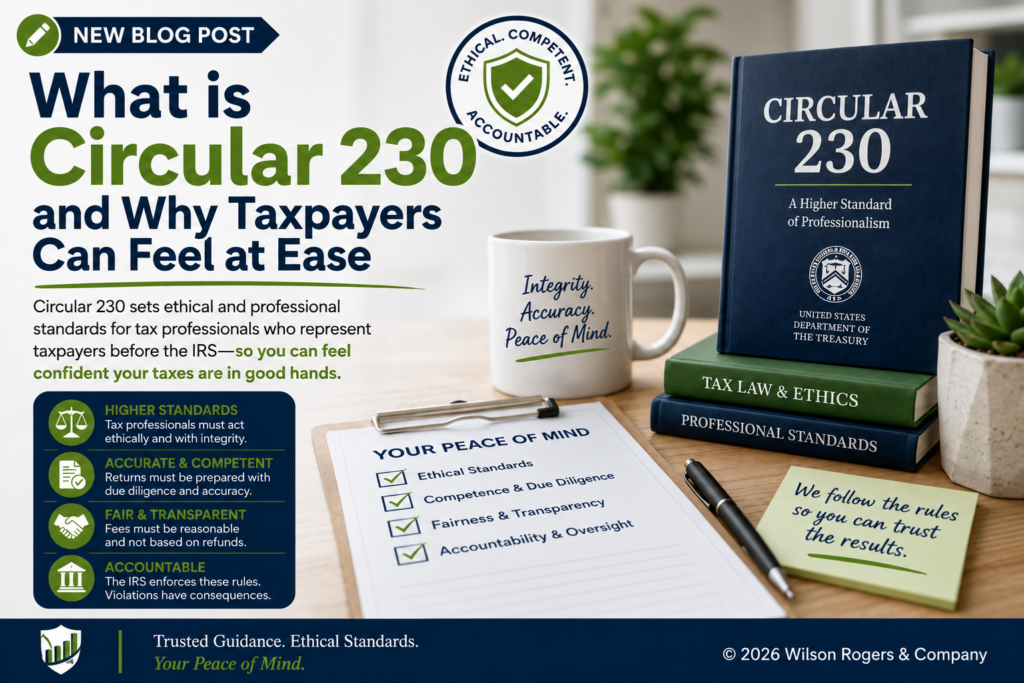
Ever feel nervous handing over your tax documents to someone else? You’re not alone. Every year, taxpayers trust preparers with their most personal financial information—income, investments, dependents, and more—hoping everything is done correctly.

The good news? There’s already a safeguard in place to protect you and hold your preparer accountable. It’s called Circular 230, and it’s one of the most important—but least known—rules in the tax world.

What Exactly is Circular 230?

Circular 230 is an official publication from the U.S. Department of the Treasury. It sets the rules and ethical standards for professionals who represent taxpayers before the IRS.

This includes CPAs, Enrolled Agents (EAs), tax attorneys, and other individuals authorized to practice before the IRS. Essentially, if someone is legally allowed to handle your taxes, they must follow Circular 230.

Think of it as the IRS’s code of conduct for tax professionals. It ensures that your preparer acts with integrity, honesty, and professionalism—giving you confidence that your taxes are in capable hands.

How Circular 230 Protects You

Circular 230 exists not just for professionals, but for taxpayers. It ensures that anyone handling your return is competent, ethical, and accountable.

First, it holds preparers to a higher standard. They must act ethically, avoid conflicts of interest, and exercise due diligence. Misleading clients, making unrealistic promises, or taking risky tax positions is not allowed.

Second, it requires accuracy and competence. Tax professionals must verify information and ensure returns are correct. This reduces the risk of errors, penalties, or audits from sloppy or negligent work.

Third, it promotes fairness. Circular 230 regulates fees in many cases, preventing unreasonable or contingent charges. You can trust you’re being charged fairly, not based on the size of your refund.

Finally, it enforces accountability. The IRS Office of Professional Responsibility monitors compliance, and a preparer who acts unethically can be suspended or barred from practice. That oversight means you’re not on your own if something goes wrong.

Why This Matters to You

Working with a preparer covered under Circular 230—like a CPA, EA, or tax attorney—gives you peace of mind. They are legally bound by federal ethics and practice standards, required to act in your best interest, and can face real consequences for misconduct.

Put simply, Circular 230 gives you a safety net every time you file. Your preparer is trained to handle your taxes responsibly, accurately, and ethically.

Your Role as a Taxpayer

Circular 230 protects you, but you still play a key role in keeping your tax process safe. Always confirm your preparer’s credentials, review your return before signing, keep copies of your records, and provide accurate information. Being proactive helps protect both you and your preparer.

Final Thoughts

Most taxpayers never think about Circular 230, but it works quietly in the background to keep the tax system ethical, fair, and accountable. It’s why you can hand over your financial documents to a qualified preparer and trust that they are required to act professionally.

Behind every trusted tax professional is a set of IRS-enforced rules designed to protect you. Circular 230 gives taxpayers peace of mind, knowing their preparer is qualified, ethical, and committed to doing things the right way—every single time.
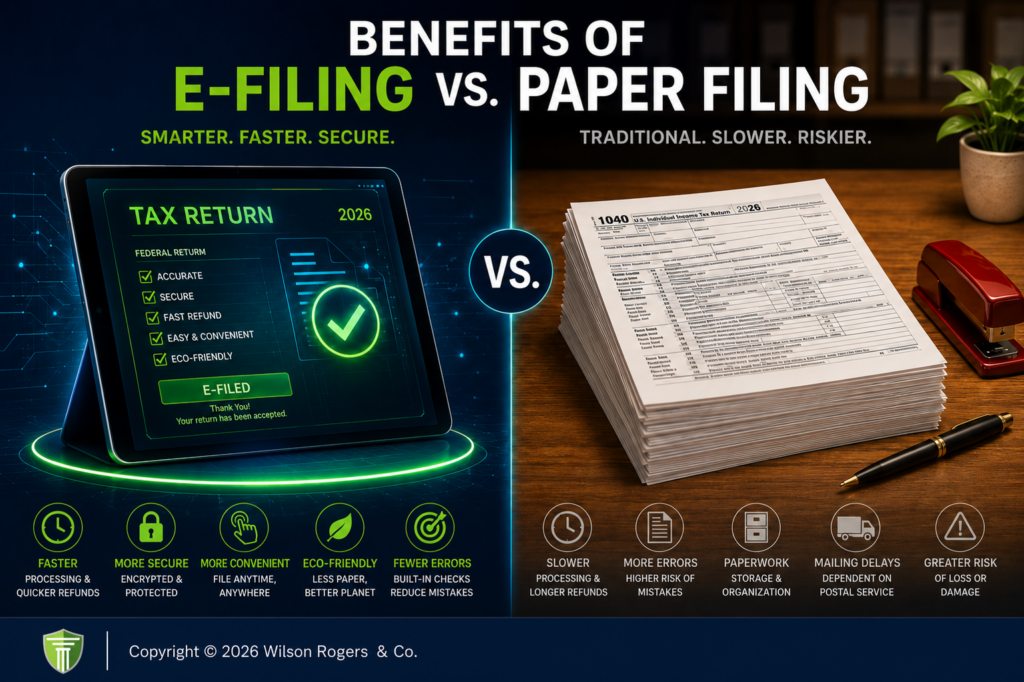

 

Benefits of E-Filing vs. Paper Filing


Question: Benefits of e-filling vs paper filling?   

E-Filing vs. Paper Filing: Which Is Better for Taxpayers?

When tax season arrives, one of the first decisions taxpayers face is how to file their return. While paper filing was once the standard, electronic filing—commonly known as e-filing—has become the preferred method for both taxpayers and the IRS. And for good reasons. E-filing offers speed, accuracy, and security that paper simply can’t match.

Whether you file on your own or work with a tax professional, understanding the benefits of e-filing can help you make a confident, informed choice.

Faster Processing Means Faster Refunds

One of the most significant advantages of e-filing is how quickly your return moves through the IRS system. Electronic returns are transmitted instantly and begin processing within hours. In most cases, taxpayers who e-file and choose direct deposit receive their refunds in 1–3 weeks.

Paper returns, on the other hand, must travel through the mail, wait in IRS processing queues, and be manually entered into the system. This often results in 6–12 week wait times—and longer during IRS backlogs.

If getting your refund quickly is a priority, e-filing is the clear winner.

Greater Accuracy and Fewer IRS Notices

E-filing significantly reduces the risk of mathematical errors and missing information. Tax software automatically performs calculations, checks for inconsistencies, and flags required fields before the return is submitted. The IRS reports that e-filed returns have a much lower error rate compared to paper filings.

With paper returns, even a small mistake—such as a mismatched Social Security number or an overlooked signature—can trigger delays or IRS notices.

E-filing helps avoid these issues and ensures your return starts on the right foot.

Immediate Confirmation of Submission

Waiting and wondering whether the IRS received your paper return can be stressful. With e-filing, you receive electronic confirmation that your return has been received and accepted. No guessing, no tracking numbers, and no risk of lost mail.

For taxpayers who value peace of mind, this acknowledgment is a major benefit.

Enhanced Security and Data Protection

E-filing systems use encrypted, secure channels to protect your sensitive financial information – the same level of protection used by major banks. Paper returns, however, can be lost, misdelivered, or even stolen while being mailed.

If safeguarding your personal information is a top priority, e-filing offers the strongest layer of protection.

Easy Access to Prior-Year Tax Documents

When you e-file, your tax professional or software program securely stores your return and supporting documents. If you need a copy for a mortgage, loan application, or audit, retrieving it takes seconds.

Paper returns can be misplaced or damaged, creating stress when documentation is needed most.

Environmentally Friendly

E-filing cuts down on unnecessary paper and reduces waste. It’s a simple way to go greener during tax season.

Required for Many Preparers and Businesses

The IRS requires certain tax preparers and many businesses to electronically file once they meet specific thresholds. E-filing helps ensure compliance and avoids penalties, making it the practical choice for most professionals.

When Paper Filing May Be Necessary

Although e-filing is the preferred method, there are a few situations where paper filing may still be required or beneficial:

  1. Filing After the E-File Deadline

Once the IRS e-file system shuts down for the season—typically in October—late returns must be submitted on paper. This often happens when taxpayers miss both the regular deadline and any extension deadline.

  1. Returns That Cannot Be E-Filed

Certain uncommon forms, elections, or specialized filings cannot be submitted electronically. For example, if your return includes forms the IRS does not support for e-file, a paper return may be necessary.

  1. Correcting Identity or Data Issues

If the IRS rejects an e-filed return due to mismatched Social Security numbers, prior-year AGI problems, or identity theft flags—and the issue can’t be resolved electronically—a paper return may be required.

  1. Amended Returns (in rare cases)

Although most amended returns can now be e-filed, some older tax years or special situations still require mailing a paper Form 1040-X.

  1. Filing Without Proper E-File Access

Taxpayers with limited technology access or those who prefer physical signatures in rare circumstances may choose paper filing, though this is far less common.

While these situations exist, they are the exception—not the rule. For the vast majority of taxpayers, e-filing remains the most efficient and reliable option.

Conclusion

While both e-filing and paper filing will get your tax return to the IRS, the benefits of e-filing—faster refunds, fewer errors, stronger security, and immediate confirmation—make it the smarter choice for most taxpayers. Paper filing still plays an important role in special situations, such as filing after the e-file deadline or handling uncommon forms the IRS doesn’t support electronically. But for everyday taxpayers and most businesses, e-filing remains the simplest, safest, and most efficient way to stay compliant during tax season.

Go to Top