
How to Deliver Excellent Customer Service and Build Lasting Relationships

Customer service plays an important role in business success. Whether you own a small business, manage a team, or work directly with customers, the quality of your interactions can influence your company’s reputation, customer loyalty, and long-term growth.
Excellent customer service goes beyond answering questions and resolving complaints. It involves understanding customer needs, communicating clearly, and creating positive experiences that encourage customers to return.
In this blog, we’ll explore the fundamentals of customer service, how to make a positive first impression, resources for improving service skills, and ways to measure customer satisfaction.
What Is Customer Service?
Customer service is the support and assistance a business provides before, during, and after a customer purchases a product or service. Its purpose is to answer questions, resolve problems, and ensure customers feel valued.
Effective customer service relies on several essential principles:
- Communication: Provide clear, accurate information and set realistic expectations.
- Empathy: Listen to concerns and respond with patience and understanding.
- Problem-solving: Identify issues and work toward practical solutions.
- Product knowledge: Understand your company’s offerings, policies, and procedures.
- Continuous improvement: Use customer feedback to identify opportunities for improvement.
Understanding these principles helps businesses deliver consistent service and build stronger customer relationships.
Who Should Be Responsible for Greeting Customers?
A customer’s first interaction with your business can shape their overall impression. Whether the greeting happens in person, over the phone, or online, customers should feel welcome and know where to turn for assistance.
Depending on your business, the person responsible may be a receptionist, customer service representative, sales associate, or another designated employee.
When selecting someone for this role, look for strong communication skills, a friendly demeanor, patience, and the ability to remain professional under pressure. Employees should also understand company policies and know when to refer questions to a manager.
Tips for making a positive first impression:
- Acknowledge customers promptly and greet them courteously.
- Ask how you can help and listen to their needs.
- Provide accurate information or connect them with the appropriate person.
- Remain professional, even during busy periods or difficult interactions.
For example, a simple greeting such as, “Welcome! How can I help you today?” can establish a friendly and professional tone.
Where Can You Find Customer Service Training Resources?
Customer service skills can be strengthened through professional training, reading, and practical experience.
Online Learning Platforms
- Coursera: Courses covering communication, customer experience, and business management.
- Udemy: Training in customer service fundamentals, complaint resolution, and communication.
- LinkedIn Learning: Professional development courses focused on customer relationships and service excellence.
Course availability and pricing vary by platform.
Books and Other Resources
Consider these books for additional insights:
- Delivering Happiness by Tony Hsieh explores company culture and customer experience.
- The Customer Rules by Lee Cockerell shares principles for creating positive customer experiences.
Webinars, podcasts, industry articles, and professional associations can also help business owners and employees stay informed about customer service practices.
Regular team training and discussions about real customer interactions can help turn these lessons into everyday habits.
How to Measure Customer Service Quality
Customer feedback helps businesses understand what they are doing well and where improvements are needed. Surveys and customer reviews provide useful information for evaluating satisfaction and identifying recurring concerns.
Why Customer Feedback Matters
Collecting feedback can help you:
- Measure customer satisfaction.
- Identify recurring complaints or service delays.
- Recognize employee strengths and training needs.
- Improve customer retention.
- Make informed decisions about service improvements.
Questions to Include in a Customer Survey
Keep surveys brief and easy to complete. Consider asking:
- How satisfied were you with your overall experience?
- Was our team professional and helpful?
- Did we resolve your questions or concerns?
- What could we do to improve your experience?
- How likely are you to recommend our business to others?
Rating-scale questions make results easier to compare, while open-ended questions allow customers to explain their experiences.
Tools for Gathering Feedback
Businesses can use several resources to collect and evaluate customer feedback:
- SurveyMonkey: Create surveys and analyze responses.
- Google Forms: Build simple customer satisfaction surveys.
- Trustpilot and Yelp: Review publicly shared customer experiences and identify potential service issues.
Collecting feedback is only the first step. Review the results, identify patterns, and make practical changes based on what customers tell you.
7 Practical Tips for Excellent Customer Service
Consistent customer service requires clear expectations and a commitment to meeting customer needs. These seven practices can help your business improve its approach.
- Listen to Customers
Give customers your attention and let them explain their concerns before offering a solution. Ask clarifying questions to make sure you understand the issue.
- Show Empathy and Stay Professional
Acknowledge customer frustrations without becoming defensive. A statement such as, “I understand why that would be frustrating. Let me see how I can help,” shows that you take their concerns seriously.
- Know Your Products, Services, and Policies
Employees should be prepared to answer questions accurately. If they do not know an answer, they should seek assistance rather than guess.
- Respond Promptly and Follow Through
Set reasonable response-time expectations, keep customers informed about delays, and honor commitments. If you promise an update, make sure you provide it.
- Resolve Complaints Effectively
Stay calm, identify the problem, explain available solutions, and involve a manager when necessary. Focus on resolving the issue rather than arguing over who is at fault.
- Personalize the Customer Experience
When appropriate, use customers’ stated preferences and service history to make interactions more relevant. Always respect their privacy and handle personal information responsibly.
- Use Feedback to Improve
Review surveys, customer reviews, and recurring complaints regularly. Provide employees with training and resources to address weaknesses and recognize strong performance.
Final Thought: Make Customer Service a Priority
Excellent customer service builds trust, strengthens customer relationships, and supports long-term business growth. From the first greeting to resolving a concern, every interaction is an opportunity to demonstrate professionalism and show customers that their business matters.
By investing in employee training, communicating effectively, and using customer feedback to improve your processes, you can create a more consistent and positive customer experience.
Set Goals for the Future: How to Create a Growth Strategy and Achieve Success

Planning for the future is an important step toward personal and professional success. Whether you want to grow your business, improve your financial situation, advance your career, or develop new skills, setting clear goals can help you turn your vision into reality.
However, having goals alone is not enough. You also need a strategy, a realistic timeline, and a way to measure your progress. Without a plan, it can be easy to lose focus, become overwhelmed, or put important priorities aside.
By establishing short-term and long-term goals, tracking your progress, and setting meaningful deadlines, you can create a roadmap that keeps you moving in the right direction. In this guide, we’ll explore how to set future goals, develop an effective growth strategy, and stay accountable along the way.
1. Establish Clear Growth Goals
The first step toward future success is identifying what you want to accomplish. Your goals should reflect your priorities, values, and vision for the future.
For business owners, growth goals might include increasing revenue, attracting new clients, improving customer retention, expanding services, or reducing operating expenses. On a personal level, goals might involve saving money, developing professional skills, or achieving a better work-life balance.
Make Your Goals Specific and Measurable
Vague goals can be difficult to act on because they do not provide a clear direction. Instead of saying, “I want to grow my business,” identify what growth means and how you will measure it.
For example:
- Increase annual revenue by 15%.
- Gain 10 new clients over the next six months.
- Save $5,000 toward a future investment.
- Complete a professional development course within three months.
- Reduce unnecessary business expenses by 10%.
Specific goals help you determine what needs to be done and provide a way to evaluate your results.
Develop a Strategy to Reach Your Goals
Once you identify your goals, outline the steps required to achieve them. Consider the resources you need, the challenges you may encounter, and the actions you can take to move forward.
For example, if your goal is to attract more clients, your strategy might include improving your website, publishing educational content, attending networking events, requesting referrals, and strengthening your social media presence.
Break larger objectives into smaller, manageable tasks. This makes the process less overwhelming and helps you build momentum as you complete each step.
Remember to review your strategy regularly. As circumstances change, you may need to adjust your approach to remain on track.
2. Balance Short-Term and Long-Term Goals
Both short-term and long-term goals are essential to a successful growth strategy. Short-term goals help you make immediate progress, while long-term goals provide direction and keep you focused on your broader vision.
Short-Term Goals
Short-term goals focus on objectives you can accomplish within a relatively brief period, such as a few days, weeks, or months.
These goals are useful because they:
- Address immediate priorities: Focus on current needs and opportunities.
- Create milestones: Break larger objectives into achievable steps.
- Allow flexibility: Make it easier to adjust your approach when circumstances change.
- Build motivation: Provide a sense of accomplishment as you complete tasks.
For example, a business owner who wants to increase annual revenue might set a short-term goal of contacting five prospective clients each week.
Achieving smaller milestones helps build confidence and creates measurable progress toward a larger objective.
Long-Term Goals
Long-term goals focus on your broader vision and typically require sustained effort over a year or longer.
These goals may include expanding your business, building retirement savings, purchasing property, developing a new revenue stream, or advancing into a leadership position.
Long-term goals:
- Support your vision: Keep your daily decisions aligned with your larger objectives.
- Create lasting impact: Focus on sustainable growth rather than immediate results alone.
- Require planning: Often involve multiple steps, resources, and milestones.
- Measure meaningful progress: Use financial results, performance indicators, or other milestones to evaluate success.
For example, a business owner might establish a five-year goal of expanding into a second location. Reaching that objective may require increasing revenue, building cash reserves, hiring employees, and researching potential locations.
Connect Short-Term Actions to Long-Term Success
Your short-term goals should support your long-term plans. If you want to expand your business in three years, your current goals might include improving profitability, strengthening client relationships, and developing repeatable business processes.
When your immediate actions align with your future vision, each milestone becomes part of a larger strategy.
3. Track Your Progress Regularly
Setting goals is only the beginning. Tracking your progress helps you determine whether your strategy is working and where adjustments may be necessary.
Without a tracking system, you may not recognize problems until they become more difficult or expensive to address.
Choose the Right Measurements
Identify specific indicators that show whether you are moving toward your goals.
Depending on your objectives, you might track:
- Revenue and profitability.
- Monthly savings or debt reduction.
- New clients or customer retention.
- Completed projects and milestones.
- Time spent on priority tasks.
- Progress toward professional development goals.
For business owners, key performance indicators (KPIs) can provide valuable insight into financial performance and operational efficiency.
For personal goals, a simple spreadsheet, calendar, budgeting application, or checklist may be sufficient.
Schedule Regular Progress Reviews
Set aside time to evaluate your progress. Weekly reviews may help you manage immediate tasks, while monthly or quarterly reviews can provide a broader view of your results.
During each review, ask yourself:
- Am I making progress toward my goal?
- Which actions are producing the best results?
- What obstacles are slowing me down?
- Do I need additional resources or support?
- Should I adjust my timeline or strategy?
Use your answers to make informed decisions rather than continuing with an approach that is not producing the desired results.
Tracking progress is not just about reaching the destination. It also helps you learn from experience, recognize opportunities, and make better decisions along the way.
4. Set Realistic Deadlines
Deadlines turn goals into actionable plans. They create a timeframe for completing tasks, help you prioritize responsibilities, and encourage you to remain accountable.
Without deadlines, even important goals can be postponed indefinitely.
Improve Time Management
A deadline helps you determine when tasks need to be completed and how much time you should allocate to them.
For example, if you want to launch a new service within three months, you might establish deadlines for market research, pricing, marketing materials, and client outreach.
Breaking the project into smaller tasks makes it easier to manage your workload and identify what needs attention first.
Strengthen Focus and Prioritization
Deadlines encourage you to distinguish between urgent tasks and activities that contribute directly to your goals.
When you understand what needs to be completed and when, you can focus your time and resources on the activities that matter most.
This can also help reduce distractions and prevent less important responsibilities from taking priority over your long-term objectives.
Plan Strategically
Before assigning a deadline, consider the complexity of the task, the resources available, and any dependencies that could affect completion.
Allow enough time to complete the work properly. An unrealistic deadline can create unnecessary stress, reduce quality, and lead to missed milestones.
A well-planned timeline should be challenging enough to encourage progress while remaining achievable.
Identify Problems Before They Escalate
Monitoring deadlines can help you recognize potential setbacks early.
For example, if a business project falls behind schedule because of limited cash flow or staffing shortages, identifying the problem early gives you more time to adjust resources, revise priorities, or change the timeline.
Early intervention can prevent small obstacles from becoming major disruptions.
Make Better Decisions
Deadlines provide a framework for evaluating priorities and making informed choices.
When time or resources are limited, you may need to decide which tasks should be completed first, which can be delegated, and which can wait.
Regularly reviewing your deadlines helps you make those decisions before delays affect your overall progress.
5. Stay Flexible and Adjust Your Strategy
Even the best plans may need to change. Unexpected expenses, shifts in the economy, personal responsibilities, or new business opportunities can affect your ability to achieve your original goals.
Flexibility allows you to respond to changing circumstances without losing sight of your broader objectives.
If a goal becomes unrealistic, determine whether you need to adjust the timeline, modify the target, or take a different approach. Changing your strategy does not necessarily mean abandoning your goal.
At the same time, avoid changing direction simply because progress feels slow. Evaluate your results, consider the evidence, and make adjustments based on what you learn.
The goal is to remain committed to your vision while staying practical about the steps required to achieve it.
6. Hold Yourself Accountable
Accountability helps turn intentions into consistent action. When you have a clear way to monitor your responsibilities, you are more likely to follow through on your commitments.
Here are a few ways to strengthen accountability:
- Write down your goals: Keep them visible so you can revisit them regularly.
- Create a task list: Identify the next action required for each objective.
- Use a calendar: Schedule time to work on important priorities.
- Track milestones: Record completed tasks and celebrate meaningful progress.
- Share your goals: Discuss appropriate goals with a trusted colleague, mentor, or accountability partner.
- Reward progress: Recognize your achievements to maintain motivation.
Accountability does not require perfection. You may experience setbacks or miss a deadline occasionally. What matters is recognizing the issue, learning from it, and returning to your plan with a clear next step.
Final Thoughts
Planning for the future begins with a clear vision, but achieving success requires more than good intentions. You need specific goals, a realistic strategy, consistent progress tracking, and deadlines that keep you accountable. Short-term goals help you build momentum, while long-term goals keep you focused on the bigger picture. By reviewing your progress and adapting to changing circumstances, you can create a practical roadmap for personal and professional growth.
Start today by choosing one goal you want to accomplish. Write down the steps required to reach it, assign a deadline to your first milestone, and schedule time to review your progress. You do not have to accomplish everything at once. Consistent, intentional action can help you build momentum and move closer to the future you envision.
12 Smart Habits That Can Help Reduce Your Business Tax Burden

Most business owners don’t want to spend more time thinking about taxes, they want to spend more time growing their business. The good news is that reducing your tax burden often isn’t about finding complicated tax strategies. It’s about building simple habits throughout the year.
Waiting until tax season to think about taxes can mean missed deductions, unnecessary penalties, and a larger tax bill than expected. Here are 12 habits that can help you keep more of what you earn while staying organized and compliant.
- Separate Business and Personal Finances
One of the easiest ways to improve your tax situation is to keep business and personal expenses separate. Use a dedicated business bank account and credit card so your bookkeeping stays clean and you don’t accidentally miss deductible expenses.
Why it matters: Clean financial records save time, reduce stress, and makes us tax preparers much more confident and decisive with your return.
- Review Your Financial Reports Every Month
Don’t wait until year-end to find out how your business is performing. Set aside time each month to review your Profit & Loss statement, cash flow, and major expenses.
Why it matters: Monthly reviews help you identify opportunities to reduce taxes before it’s too late to act.
- Keep Track of Every Business Expense
Small expenses add up over the course of a year. Software subscriptions, office supplies, marketing costs, professional memberships, and business meals may all be deductible when properly documented.
Common mistake: Waiting until tax season to search for receipts usually means some deductions get lost.
- Pay Estimated Taxes on Time
Many business owners are required to make quarterly estimated tax payments. Missing these deadlines can result in penalties and interest.
Planning ahead helps spread your tax payments throughout the year instead of facing one large surprise.
- Contribute to Retirement Accounts
Retirement plans can do more than prepare you for the future, they may also reduce your taxable income today.
Depending on your business structure, there may be several retirement plan options available that provide valuable tax benefits.
- Track Business Mileage
If you use your personal vehicle for business, keep an accurate mileage log throughout the year.
Trying to recreate mileage months later isn’t just difficult, it may also reduce the accuracy of your records.
- Don’t Overlook Home Office Expenses
If you legitimately qualify for the home office deduction, keeping good records is essential. Expenses such as utilities, internet, insurance, and maintenance may qualify depending on your situation.
Good documentation makes all the difference.
- Plan Major Purchases Before Year-End
Thinking about buying equipment, upgrading computers, or investing in new software?
The timing of these purchases can affect your tax liability. Planning ahead may allow you to maximize available deductions while still making smart business decisions.
- Meet With Your CPA Before Tax Season
One of the biggest mistakes business owners make is waiting until tax season to ask tax questions.
A year-end planning meeting gives you time to discuss strategies such as:
- Managing taxable income
- Retirement contributions
- Equipment purchases
- Estimated tax payments
- Potential tax credits
By the time your tax return is being prepared, many planning opportunities have already passed.
- Keep Your Bookkeeping Current
Accurate bookkeeping isn’t just for tax returns; it’s one of the best management tools a business owner has.
When your financial records are current, you can:
- Make better business decisions
- Identify unnecessary spending
- Prepare for tax season with confidence
- Reduce the likelihood of costly mistakes
- Stay Organized Throughout the Year
Instead of scrambling every spring, create simple weekly or monthly routines.
Examples include:
- Filing receipts
- Reconciling bank accounts
- Reviewing invoices
- Recording payroll
- Organizing important tax documents
A little consistency goes a long way.
- Ask Before You Make Big Decisions
Hiring employees, purchasing equipment, expanding locations, or changing your business structure can all have tax consequences.
A quick conversation before making a major decision often uncovers opportunities that aren’t available afterward.
The Bottom Line
The business owners who consistently reduce their tax burden aren’t necessarily the ones with the biggest budgets or the most complex businesses. They’re the ones who plan ahead.
Good tax planning starts long before tax season. By building a few simple habits into your routine, you’ll be better prepared to claim every deduction you’re entitled to, avoid unnecessary surprises, and make more informed financial decisions throughout the year.
At Wilson Rogers, we believe tax planning should be proactive, not reactive. Our goal is to help business owners understand what their numbers mean, avoid common pitfalls, and make confident decisions that support long-term success. When taxes become part of your year-round business strategy, you’re in a much stronger position to keep more of what you’ve worked hard to earn.
Home Office Deduction: How Depreciation Recapture Affects the Sale of Your Home

Using part of your home for business can provide meaningful tax savings through the home office deduction. Homeowners and renters alike can benefit from this deduction, but if you later sell your home, there’s an important consideration: depreciation recapture. Understanding how this works can help you plan ahead and avoid surprises at tax time.
Requirements for the Home Office Deduction
To claim the home office deduction, two key requirements must be met. First, the space must be used regularly and exclusively for business purposes. A home office cannot double as a guest room, den, or entertainment space. Occasional or incidental business use, such as quarterly meetings, does not qualify. Second, your home must serve as your principal place of business. Even if you conduct work elsewhere, you may qualify if you use your home substantially and regularly. Separate structures, such as garages, studios, or barns, can also qualify if they are used exclusively for business.
How to Claim the Deduction
Deductions are generally based on the percentage of your home used for business. There are two calculation methods. The simplified method allows a deduction of $5 per square foot, up to 300 square feet, for a maximum of $1,500. Depreciation is not claimed under this method, which means no recapture tax applies when you sell, and recordkeeping is minimal.
The regular (actual expense) method calculates the actual expenses of operating your home, including mortgage interest, utilities, insurance, repairs, and depreciation. Expenses are allocated based on the business-use portion of your home, and deductions are reported on IRS Form 8829. While this method often results in larger deductions each year, it triggers depreciation recapture when you sell your home.
Where you report the deduction depends on your business type. Self-employed individuals typically report it on Schedule C, Line 30. Employees may report eligible expenses on Schedule A as itemized deductions (if allowed). Partnerships, LLCs, and S-Corps usually handle the deduction through accountable plans or entity-level reimbursements.
Depreciation Recapture Explained
Depreciation reduces your taxable income in the years you claim it, but when you sell your home, the IRS requires you to recapture the depreciation for the business-use portion. Depreciation recapture is taxed at a maximum rate of 25%, separate from long-term capital gains, which are generally taxed at 15%. Even if you didn’t claim all allowable depreciation, the IRS requires recapture of any portion that could have been claimed.
Example:
- Home purchase price: $300,000
- Business-use portion: 10%
- Depreciation claimed: $10,000
- Sale price: $500,000
Recapture: $10,000 taxed at up to 25%
Remaining gain: $190,000 may qualify for the capital gains exclusion ($250,000 single / $500,000 married filing jointly)
Capital Gains Exclusion and the Home Office
The capital gains exclusion allows homeowners to exclude up to $250,000 (single) or $500,000 (married filing jointly) of gain on the sale of their primary residence if they owned and lived in the home for at least two of the last five years. If your office is inside the home, the exclusion generally applies to the entire home, but depreciation recapture still applies.
If your office is in a separate structure, the IRS treats it as a separate dwelling unit. You must meet ownership and use requirements for both the home and the structure to apply the exclusion. If these requirements are not met, gains from the office portion are fully taxable, including depreciation recapture at 25% and any additional gain at 15%.
Planning Strategies Before Selling
Business owners can take steps to minimize the impact of depreciation recapture. If the office is in a separate structure, consider not claiming home office deductions for at least two years before selling to maximize the exclusion on the full property. If the office is inside your home, continue claiming deductions, since recapture is required regardless of whether you claimed them.
Maintaining detailed records is essential. Keep track of expenses, depreciation, and the square footage of your office. Accurate documentation ensures correct calculation of recapture and can help prevent errors or audits.
Why Depreciation Recapture Isn’t a Penalty
It’s important to understand that depreciation recapture is not a penalty. It simply balances the tax benefit you’ve already received. Depreciation reduces taxable income over the years, providing real savings, and recapture ensures the IRS taxes the portion of gain already offset by those deductions. Even with recapture, the home office deduction remains a valuable tool for business owners, helping offset real expenses and reflecting the dual purpose of your home as both a residence and a workspace.
Why Does The IRS Hold EITC Refunds?
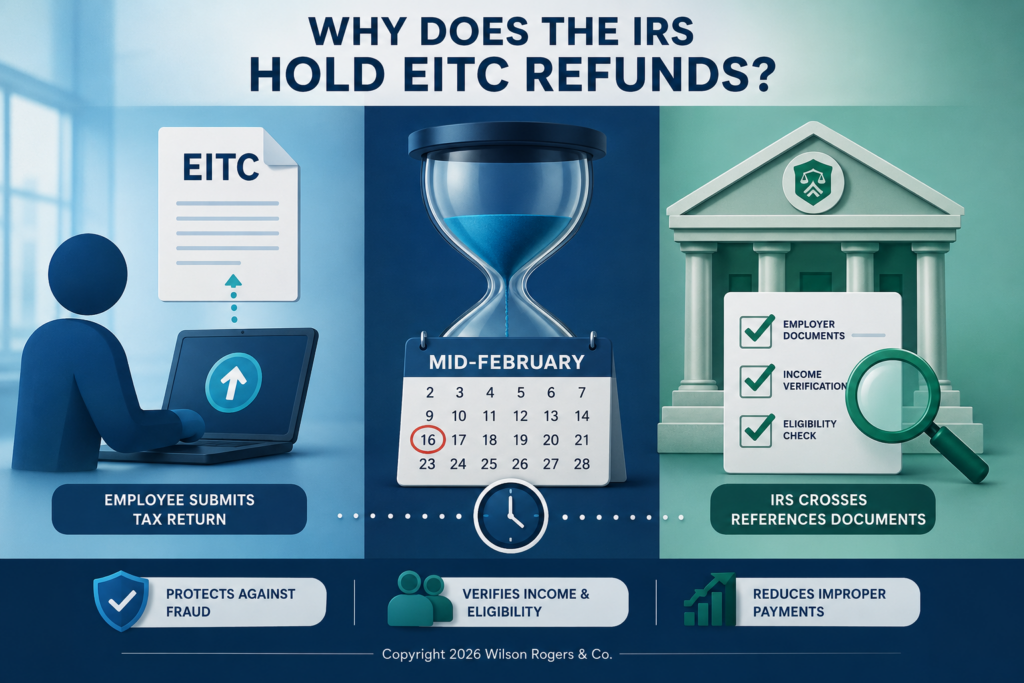
Understanding the EITC and Why Refunds Are Delayed by the IRS
The Earned Income Tax Credit (EITC) is a federal tax credit designed to support working individuals and families with lower to moderate income levels. It is intended to reduce tax liability and, because it is refundable, it can also increase a taxpayer’s refund—even when no federal income tax is owed. Eligibility for the credit is based primarily on earned income, such as wages, salaries, tips, and self-employment income. However, qualification is not determined by income alone. Filing status, the number of qualifying children, residency requirements, and valid Social Security numbers for all individuals on the return also play a critical role. Because of these combined factors, the EITC is one of the more complex credits in the tax code and requires careful compliance with IRS rules.
While the credit can provide a meaningful financial benefit, it is also subject to additional IRS scrutiny. This is especially true when it comes to the timing of refunds.
Why the IRS Holds EITC Refunds
Taxpayers who claim the EITC often notice that their refunds are issued later than expected, particularly when compared to returns without refundable credits. This delay is not the result of a processing issue, but rather a set of requirements and safeguards built into the tax system.
Federal law requires a refund delay
Under the Protecting Americans from Tax Hikes Act (PATH Act), the IRS is required to delay the issuance of refunds that include the EITC (as well as the Additional Child Tax Credit) until at least mid-February each year. This rule applies regardless of when the return is filed. Even if a taxpayer submits their return in January, the IRS is not permitted to release the refund before the mandated date. This timing requirement was implemented to allow additional verification before refunds are issued.
Increased focus on fraud prevention
The EITC has historically been one of the most frequently reviewed credits due to its high claim volume and susceptibility to errors and fraudulent filings. Common issues include incorrect dependent claims, mismatched income reporting, and identity theft-related filings.
The delay period gives the IRS additional time to evaluate returns for inconsistencies and potential fraud indicators before issuing refunds.
Verification of income and eligibility
EITC eligibility depends on information that must be independently verified, including wages reported by employers, dependent qualifications, and filing status accuracy. During the hold period, the IRS cross-references tax returns with third-party reporting documents such as W-2s and 1099s to confirm that the information provided is consistent.
This verification process is designed to ensure that only eligible taxpayers receive the credit and that refund amounts are accurate.
Reducing improper payments
Because the EITC is a refundable credit, it represents a significant portion of federal tax refunds each year. Even small inaccuracies can result in improper payments. The additional review period helps the IRS reduce these errors and maintain compliance with federal tax law.
What Taxpayers Should Expect
A delayed EITC refund is not necessarily an indication of an issue with a tax return. In most cases, it simply reflects the standard processing timeline required under federal law.
Once the PATH Act hold period concludes in mid-February, refunds are generally issued in the order they were received, assuming no additional review or verification is required.
However, further delays can occur if the IRS identifies discrepancies in income reporting, dependent information, or if additional identity verification is needed.
Conclusion
The Earned Income Tax Credit remains one of the most impactful credits available to working taxpayers, but it is also subject to enhanced oversight. The IRS refund delay associated with the EITC is not discretionary, it is a statutory requirement intended to reduce fraud, verify eligibility, and ensure accurate payment of refundable credits.
While the waiting period can be inconvenient, it serves an important role in maintaining the integrity of the tax system and ensuring that refunds are issued correctly.

Click above to watch our Money Management and Tax Chit Chat video series!

Click Above For Your Top Secret Guide To Tax Reduction, Business Success and Solving IRS Debt Problems!

Click Above To Learn 111 Ways To Slash Your Tax Bill!