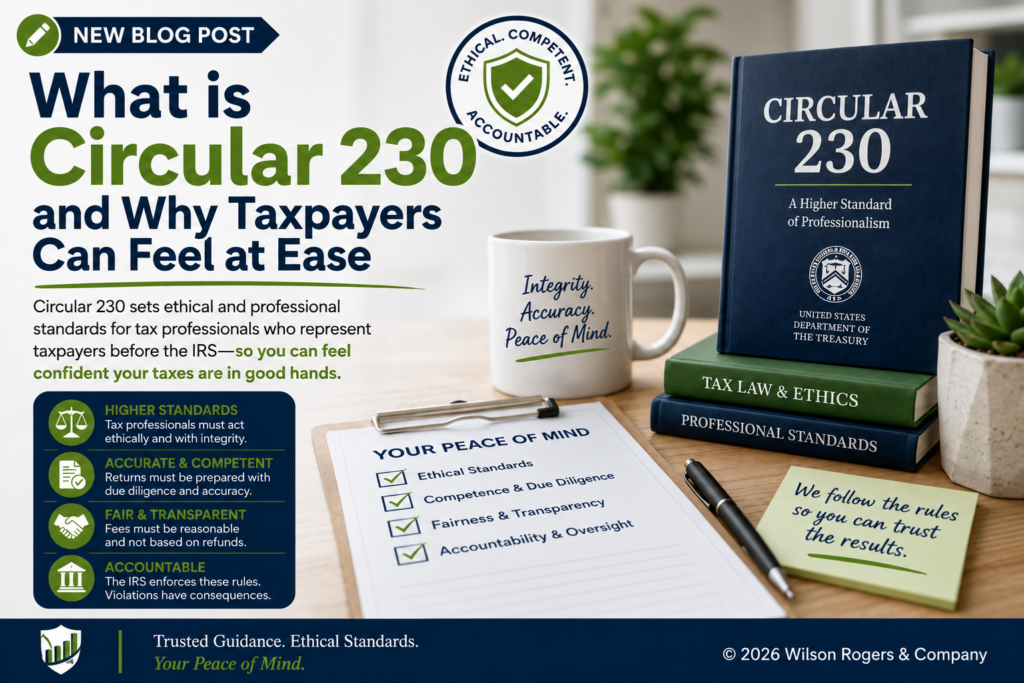
What is Circular 230 & Why Taxpayers Can Feel at Ease
Ever feel nervous handing over your tax documents to someone else? You’re not alone. Every year, taxpayers trust preparers with their most personal financial information—income, investments, dependents, and more—hoping everything is done correctly.

The good news? There’s already a safeguard in place to protect you and hold your preparer accountable. It’s called Circular 230, and it’s one of the most important—but least known—rules in the tax world.

What Exactly is Circular 230?

Circular 230 is an official publication from the U.S. Department of the Treasury. It sets the rules and ethical standards for professionals who represent taxpayers before the IRS.

This includes CPAs, Enrolled Agents (EAs), tax attorneys, and other individuals authorized to practice before the IRS. Essentially, if someone is legally allowed to handle your taxes, they must follow Circular 230.

Think of it as the IRS’s code of conduct for tax professionals. It ensures that your preparer acts with integrity, honesty, and professionalism—giving you confidence that your taxes are in capable hands.

How Circular 230 Protects You

Circular 230 exists not just for professionals, but for taxpayers. It ensures that anyone handling your return is competent, ethical, and accountable.

First, it holds preparers to a higher standard. They must act ethically, avoid conflicts of interest, and exercise due diligence. Misleading clients, making unrealistic promises, or taking risky tax positions is not allowed.

Second, it requires accuracy and competence. Tax professionals must verify information and ensure returns are correct. This reduces the risk of errors, penalties, or audits from sloppy or negligent work.

Third, it promotes fairness. Circular 230 regulates fees in many cases, preventing unreasonable or contingent charges. You can trust you’re being charged fairly, not based on the size of your refund.

Finally, it enforces accountability. The IRS Office of Professional Responsibility monitors compliance, and a preparer who acts unethically can be suspended or barred from practice. That oversight means you’re not on your own if something goes wrong.

Why This Matters to You

Working with a preparer covered under Circular 230—like a CPA, EA, or tax attorney—gives you peace of mind. They are legally bound by federal ethics and practice standards, required to act in your best interest, and can face real consequences for misconduct.

Put simply, Circular 230 gives you a safety net every time you file. Your preparer is trained to handle your taxes responsibly, accurately, and ethically.

Your Role as a Taxpayer

Circular 230 protects you, but you still play a key role in keeping your tax process safe. Always confirm your preparer’s credentials, review your return before signing, keep copies of your records, and provide accurate information. Being proactive helps protect both you and your preparer.

Final Thoughts

Most taxpayers never think about Circular 230, but it works quietly in the background to keep the tax system ethical, fair, and accountable. It’s why you can hand over your financial documents to a qualified preparer and trust that they are required to act professionally.

Behind every trusted tax professional is a set of IRS-enforced rules designed to protect you. Circular 230 gives taxpayers peace of mind, knowing their preparer is qualified, ethical, and committed to doing things the right way—every single time.


 

2015 IRS Dirty Dozen

Screen Shot 2013-08-04 at 10.18.30 AM

As the tax season gets under way, the IRS does us all a public service by posting a list of the top tax scams currently making the rounds.  Typically this is done by posting one scam per day over a two to three week period; usually right as the filing season opens up.  The IRS recently finished releasing their list, which can be found here.

As we often see some of these scams impacting clients that visit our office, we figured we would post a quick summary.  So without further adieu here is the…

Recap of the 2015 IRS “Dirty Dozen” scams:

  • Phone Scams: Aggressive and threatening phone calls by criminals impersonating IRS agents remains a threat to taxpayers. Callers often state that they are IRS agents and mention police arrest, deportation, license revocation and other things if the taxpayer doesn’t immediately pay their bill (i.e. as in on the phone right now as we speak). Remember, the IRS typically contacts taxpayers via letter (not phone) and don’t show up unannounced.  If someone is asking for payment over the phone, tell them to give you a phone number, that you are calling your lawyer or simply hang up!
  • Identity Theft: Taxpayers need to watch out for identity theft especially around tax time. If you believe that a fraudulent return has been filed by someone using your Social Security Number, we urge you to follow the steps we outlined in this identity theft blog post.
  • Return Preparer Fraud: Taxpayers need to be on the lookout for unscrupulous return preparers. Most tax professionals provide honest high-quality service. But there are some dishonest preparers who’s actions hurt you and the entire profession.  Check out this post for the questions you want to ask any tax professional that you are thinking of using.
  • Inflated Refund Claims: Taxpayers should be wary of anyone who asks them to sign a blank return, promise a big refund before looking at their records, or charge fees based on a percentage of the refund.
  • Falsifying Income to Claim Credits: Taxpayers should avoid inventing income to erroneously claim tax credits (e.g. the Earned Income Credit or EIC).
  • Claims for Fuel Tax Credits:  The fuel tax credit is generally limited to off-highway business use, including use in farming.  Consequently, the credit is not available to most taxpayers.
  • Hiding Income with Fake Documents:  The mere suggestion of falsifying documents to reduce tax bills or inflate tax refunds should be a huge red flag when using a paid tax return preparer.
  • Phishing: Fake emails or websites looking to steal personal information continue to be a problem. The IRS will not send you an email about a bill or refund out of the blue.
  • Fake Charities: Taxpayers should be on guard against groups masquerading as charitable organizations to attract donations from unsuspecting contributors. Follow the 10 steps in this post to ensure that you are giving to a “real” organization and not someone trying to steal your money.
  • Offshore Tax Avoidance: Anyone suggesting that you can avoid paying tax by hiding it in an “offshore” account is selling you lies.  Just research FACTA and you’ll see what the IRS has to say about the topic.
  • Abusive Tax Shelters: The vast majority of taxpayers pay their fair share, and everyone should be on the lookout for people peddling tax shelters that sound too good to be true.
  • Frivolous Tax Arguments:  Promoters of frivolous schemes encourage taxpayers to make unreasonable and outlandish claims to avoid paying the taxes they owe. Just know that the penalty for filing a frivolous tax return is $5,000.
By |2015-02-12T21:47:10-06:00February 12, 2015|Categories: Tax Talk|Tags: , , , , , , , |Comments Off on 2015 IRS Dirty Dozen
Go to Top