
Tax Planning vs Tax Preparation: Why Both Matter
 

For many individuals and business owners, tax season feels like a single event that comes around once a year. Documents are gathered, information is handed off, and a return is filed. Once it’s done, attention shifts back to daily operations or personal finances until the following year. While that process is familiar, it only represents one piece of a much larger picture.

Taxes are not just a once-a-year obligation. They are the result of financial decisions made over time. That is where the distinction between tax preparation and tax planning becomes important.

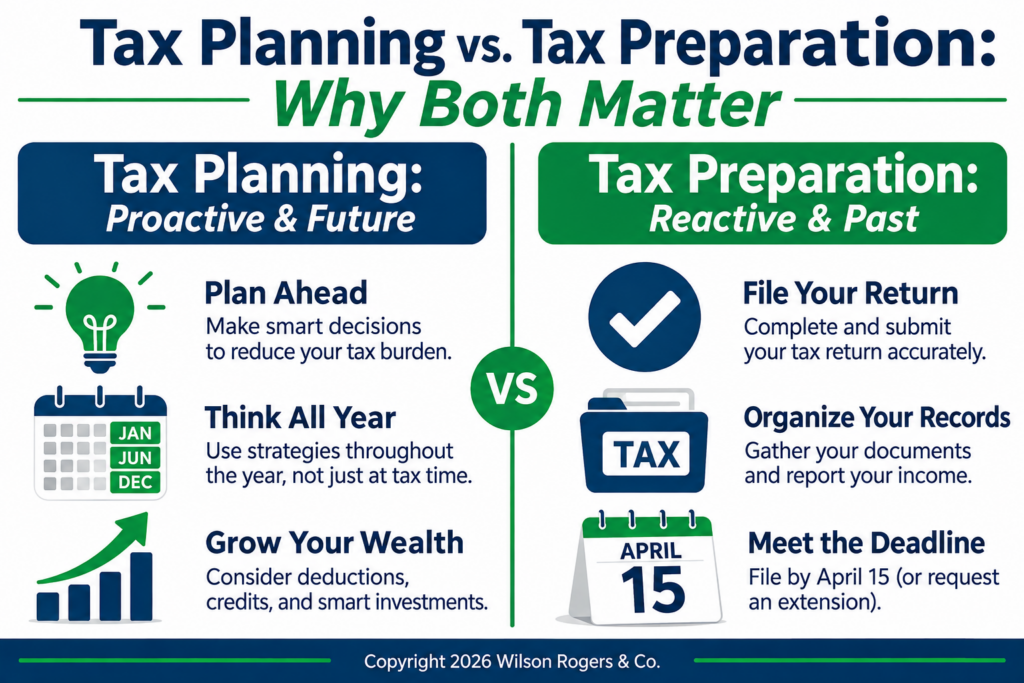
Tax Preparation: Looking Backward

Tax preparation is the process most people associate with filing a return. It involves taking completed financial information from the prior year and organizing it into the proper tax reporting format. W-2 income, 1099 earnings, business profit or loss, investment activity, and eligible deductions are all compiled and reported according to IRS guidelines.

At its core, tax preparation is about accuracy and compliance. It ensures that what happened during the year is properly reflected on a tax return and submitted correctly to the IRS and state agencies.

Because of its nature, tax preparation is inherently backward-looking. By the time the return is being prepared, the financial year has already ended. The numbers are fixed, and the focus shifts to reporting rather than influencing outcomes.

Tax Planning: Looking Forward

Tax planning works in a very different way. Instead of focusing on what has already happened, it focuses on what is still within your control. It is the process of making financial decisions during the year with an awareness of how those decisions will affect future tax liability.

This can involve a wide range of considerations. For some, it may mean adjusting how and when income is received. For others, it may involve evaluating retirement contributions, managing estimated tax payments, or deciding whether a different business structure would be more efficient from a tax perspective.

Unlike tax preparation, tax planning is not about recording history. It is about influencing results before they are finalized.

Why Timing Changes Everything

The difference between planning and preparation becomes clearer when timing is considered. Take, for example, a self-employed individual earning $120,000 in net income. If no planning takes place during the year, that full amount is reported at tax time on a Schedule C, and the taxpayer is responsible for both income tax and self-employment tax on the entire profit. At that point, during tax preparation, the outcome is already set. The return reflects what happened, and there is little room for adjustment. However, if planning had been made earlier in the year, the situation might look different. The individual could have evaluated whether operating as an S corporation made sense. With proper structure and reasonable compensation, part of the income may have been treated differently for tax purposes, potentially reducing self-employment tax exposure.

The important distinction is not just the strategy itself, but when it is implemented. Once the year ends, the opportunity to influence that year’s tax outcome is largely gone.

The Limitations of Tax Preparation Alone

Many taxpayers rely solely on tax preparation without realizing what is missing in the process. While preparation ensures compliance, it does not provide the ability to adjust outcomes after the fact.

This often leads to situations where taxpayers are surprised by their tax liability, discover missed opportunities for deductions, or realize too late that certain decisions could have been structured more efficiently.

In these cases, the issue is not the quality of the tax return itself, but the absence of planning throughout the year. The return simply reflects financial decisions that have already been made.

How Planning and Preparation Work Together

Tax planning and tax preparation are not competing services. They serve different purposes and work best when used together as part of a continuous process.

Tax preparation provides clarity on where things stand after the year is complete. Tax planning uses that information to guide better decisions moving forward. One documents the outcome, while the other helps influence it.

When both are part of an ongoing approach rather than isolated events, taxpayers are better positioned to manage liability, avoid surprises, and make more informed financial decisions throughout the year.

Final Thought

Tax preparation tells the story of what already happened. Tax planning helps shape what that story will look like before it is written. When taxpayers rely on preparation alone, they are reacting to financial outcomes after they are locked in. When planning is added into the process, those outcomes become more intentional.


12 Smart Habits That Can Help Reduce Your Business Tax Burden


Most business owners don’t want to spend more time thinking about taxes, they want to spend more time growing their business. The good news is that reducing your tax burden often isn’t about finding complicated tax strategies. It’s about building simple habits throughout the year.

Waiting until tax season to think about taxes can mean missed deductions, unnecessary penalties, and a larger tax bill than expected. Here are 12 habits that can help you keep more of what you earn while staying organized and compliant.

  1. Separate Business and Personal Finances

One of the easiest ways to improve your tax situation is to keep business and personal expenses separate. Use a dedicated business bank account and credit card so your bookkeeping stays clean and you don’t accidentally miss deductible expenses.

Why it matters: Clean financial records save time, reduce stress, and makes us tax preparers much more confident and decisive with your return.

  1. Review Your Financial Reports Every Month

Don’t wait until year-end to find out how your business is performing. Set aside time each month to review your Profit & Loss statement, cash flow, and major expenses.

Why it matters: Monthly reviews help you identify opportunities to reduce taxes before it’s too late to act.

  1. Keep Track of Every Business Expense

Small expenses add up over the course of a year. Software subscriptions, office supplies, marketing costs, professional memberships, and business meals may all be deductible when properly documented.

Common mistake: Waiting until tax season to search for receipts usually means some deductions get lost.

  1. Pay Estimated Taxes on Time

Many business owners are required to make quarterly estimated tax payments. Missing these deadlines can result in penalties and interest.

Planning ahead helps spread your tax payments throughout the year instead of facing one large surprise.

  1. Contribute to Retirement Accounts

Retirement plans can do more than prepare you for the future, they may also reduce your taxable income today.

Depending on your business structure, there may be several retirement plan options available that provide valuable tax benefits.

  1. Track Business Mileage

If you use your personal vehicle for business, keep an accurate mileage log throughout the year.

Trying to recreate mileage months later isn’t just difficult, it may also reduce the accuracy of your records.

  1. Don’t Overlook Home Office Expenses

If you legitimately qualify for the home office deduction, keeping good records is essential. Expenses such as utilities, internet, insurance, and maintenance may qualify depending on your situation.

Good documentation makes all the difference.

  1. Plan Major Purchases Before Year-End

Thinking about buying equipment, upgrading computers, or investing in new software?

The timing of these purchases can affect your tax liability. Planning ahead may allow you to maximize available deductions while still making smart business decisions.

  1. Meet With Your CPA Before Tax Season

One of the biggest mistakes business owners make is waiting until tax season to ask tax questions.

A year-end planning meeting gives you time to discuss strategies such as:

  • Managing taxable income
  • Retirement contributions
  • Equipment purchases
  • Estimated tax payments
  • Potential tax credits

By the time your tax return is being prepared, many planning opportunities have already passed.

  1. Keep Your Bookkeeping Current

Accurate bookkeeping isn’t just for tax returns; it’s one of the best management tools a business owner has.

When your financial records are current, you can:

  • Make better business decisions
  • Identify unnecessary spending
  • Prepare for tax season with confidence
  • Reduce the likelihood of costly mistakes
  1. Stay Organized Throughout the Year

Instead of scrambling every spring, create simple weekly or monthly routines.

Examples include:

  • Filing receipts
  • Reconciling bank accounts
  • Reviewing invoices
  • Recording payroll
  • Organizing important tax documents

A little consistency goes a long way.

  1. Ask Before You Make Big Decisions

Hiring employees, purchasing equipment, expanding locations, or changing your business structure can all have tax consequences.

A quick conversation before making a major decision often uncovers opportunities that aren’t available afterward.

The Bottom Line

The business owners who consistently reduce their tax burden aren’t necessarily the ones with the biggest budgets or the most complex businesses. They’re the ones who plan ahead.

Good tax planning starts long before tax season. By building a few simple habits into your routine, you’ll be better prepared to claim every deduction you’re entitled to, avoid unnecessary surprises, and make more informed financial decisions throughout the year.

At Wilson Rogers, we believe tax planning should be proactive, not reactive. Our goal is to help business owners understand what their numbers mean, avoid common pitfalls, and make confident decisions that support long-term success. When taxes become part of your year-round business strategy, you’re in a much stronger position to keep more of what you’ve worked hard to earn.

Go to Top