Medicare Premiums & Self Employed Health Insurance Deduction

FinalMedicareSquare

Many self-employed taxpayers know that come tax time, they can receive a deduction if they pay for health insurance.  However, what if you are “semi-retired” and your insurance comes in the form of Medicare?  Can you take a deduction for the premiums you paid?  Read on to find out!

Generally speaking, a taxpayer may be able to take this deduction if one of the following applies:

  • They had a net profit from self-employment. You would report this on a Schedule C, Profit or Loss From Business, Schedule C-EZ, Net Profit From Business, or Schedule F, Profit or Loss From Farming.
  • They had self-employment earnings as a partner reported to you on Schedule K-1 (Form 1065).
  • They used an optional method to figure net earnings from self-employment on Schedule SE, Self-Employment Tax.
  • They were paid wages reported on Form W-2 as a shareholder who owns more than two percent of the outstanding stock of an S corporation.

Before tax year 2010, Form 1040 instructions for line 29 stated, “Medicare premiums cannot be used to figure the [self-employed health insurance] deduction.”  Likewise, before 2010, Publication 535, Business Expenses, stated that Medicare Part B premiums were not deductible as a business expense, in keeping with Field Service Advisory (FSA) 3042, issued in 1995.

However, in 2012 the Office of Chief Counsel advised IRS attorneys that self-employed individuals may deduct Medicare premiums from their self-employment income. Chief Counsel Advice (CCA) 201228037 clarified the IRS position that previously had appeared only in the instructions to Form 1040.

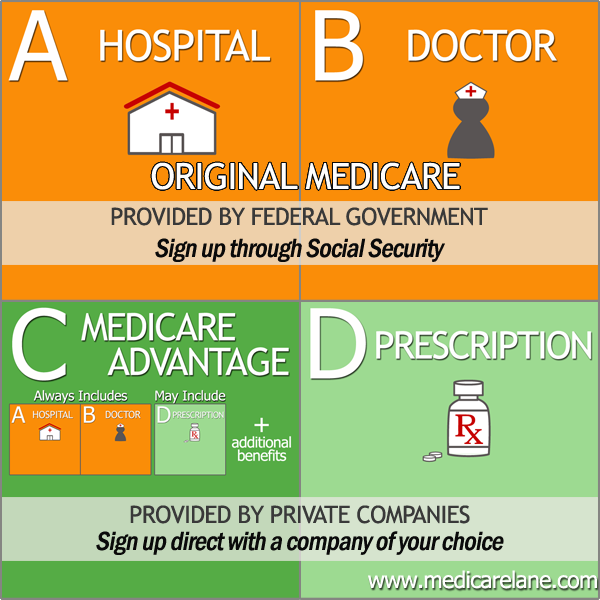
So what does this mean?  Well, if you meet the requirements, Medicare premiums you voluntarily pay to  obtain insurance in your name that is similar to qualifying private health insurance can be used  to figure the deduction.  This is applicable for all Medicare premiums (Parts A, B, C and D).

What if you paid premiums in the past but failed to take the deduction?  You can amend your previously filed return (if you’re within the 3 year window) to refigure and claim the deduction.  For more information, see Form 1040X, Amended US Individual Income Tax Return.

Tax Issues for Self-Employed Individuals

Wait, another tax?

Wait, another tax?

Many self-employed individuals are considered “sole proprietors” or “independent contractors” for legal and tax purposes.  This is true regardless of whether you are turning a hobby into a business, selling an indispensable widget or providing services to others.  As a self-employed person, you report your business revenue results on your personal income tax return.  The following are a few guidelines and issues you should keep in mind when pursuing your entrepreneurial spirit.

Schedule C – Form 1040
As a self-employed person, you are required to report your business profits or losses on Schedule C of Form 1040.  The income earned through your business is taxable to you as an individual.  This is true even if you do not withdraw any money from the business.  While you are required to report your gross revenues, you are also allowed to deduct business expenses incurred in generating that revenue.  If your business efforts result in a loss, the loss will generally be deductible against your total income from all sources, subject to special rules relating to whether your business is considered a hobby and whether you have anything “at risk.”  If it generates a profit, then you will have to pay taxes on it.

Home-Based Business
Many self-employed individuals work out of their home and are entitled to deduct a percentage of certain home costs that are applicable to the portion of the home that is used as your office.  This can include payments for utilities, telephone services, etc.  You may also be eligible to claim these deductions if you perform administrative tasks from your home or store inventory there.  If you work out of your home and have an additional office at another location, you also may be able to convert your commuting expenses between the two locations into deductible transportation expenses.  Since most self-employed individuals find themselves working more than the traditional 40-hour week, there are a significant number of advantageous deductions that can be claimed.  Unfortunately, we find that most self-employed individuals miss these deductions because they are unaware of them.

The Bad News  – Self-Employment Taxes
A negative aspect to being self-employed is the self-employment tax.  All salaried individuals are subject to automatic deductions from their paycheck including FICA, etc.  In that many self-employed individuals often do not run a formal payroll for themselves, the government must recapture these taxes through the self-employment tax.  Simply put, you are required to pay self-employment taxes at a rate of 15.3% on your net earnings, up to an annual income cap.  Beyond the annual cap, the rate is reduced to just the Medicare tax rate of 2.9%.

In an interesting twist that reveals the confusing nature of the tax code, you are allowed a partial deduction for the self-employment tax.  Simply put, you are allowed to deduct one-half of your self-employment taxes from your gross income.  For example, if you have to pay $10,000 in self-employment taxes, you are allowed a deduction on your 1040 return of $5,000.  Many self-employed individuals miss this deduction and pay more money to taxes than needed.

No Withholding Tax
Unlike a salaried employee sitting in a cubicle,  the taxes above are not withheld from your paycheck.  While this sounds great, you are required to make quarterly estimated tax payments.  If you fail to make the payments, you are subject to a penalty, but the penalty is not the biggest concern.  A potentially dangerous pitfall of being self-employed is failing to pay quarterly estimated taxes AND then getting caught at the end of the year without sufficient funds to pay your taxes.  The IRS is not going to be happy if you fail to pay your taxes and you will suffer the consequences in the form of penalties and interest.  Making sure you pay quarterly estimated taxes helps avoid this situation and it is highly recommended that you follow this course of action.  If you have encountered this situation for yourself, be sure to contact us immediately to help you remedy this particular circumstance.

Record Keeping
You must maintain complete records of all business income and expenses.  Simply put, document everything.  Create a filing system for each month and file every receipt, etc.  All business travel expenses must be documented, including auto mileage you incur when performing business tasks.  Office supply stores sell business mileage books that you can keep in your car and use whenever you travel.  There are even some apps for your phone that will allow you to push a button at the beginning and end of your trip and it will calculate the mileage for you.  If you have any doubt about documenting something, just do it!

As a self-employed individual, your focus and time is spent on making your business successful.  Your focus is not on the complexities of the tax code and how to limit the amount of taxes you owe.  If any of the information in this article is new to you, then it is highly likely you have paid far more in taxes than required.

By |2020-09-16T10:58:45-06:00July 29, 2014|Categories: Tax Talk|Tags: , , , , , , , |Comments Off on Tax Issues for Self-Employed Individuals

Get Our 100 Ultimate Tax Tips FREE!

Ready to save mucho dinero?

Over the years we have seen people spend hours fighting over a $100 over charge by their credit card company, yet spend little to no time learning how to reduce their tax bill by thousands of dollars.  This little 10 page guide will take you less than 15 minutes to simply read from end-to-end.  It will take you a little longer to figure out what applies to your situation, but in the grand scheme of things it will still only be a few minutes.  But if you do the above two things, you may be able to literally shave thousands, if not hundreds of thousands of dollars from your future tax bills!

If you  go here and put your email address in the box, we’ll rush you this information packed guide for absolutely, certifiably the best price on the entire planet Earth; FREE!  Can’t beat that right?

What’s even better is that we’re 100% positive that you can find something in this guide that you can use.  Furthermore, these aren’t just some “foo-foo” list of tax strategies that you can find out on the internet.  No, these are proven strategies developed/researched over many years that are often overlooked, forgotten or simply not implemented.  Want a sample of what’s inside?  Here is just a taste of what you’ll get:

Business Start-Up Costs: Start-up costs are amounts paid or incurred for: (a) creating an active trade or business; or (b) investigating the creation or acquisition of an active trade or business. The fees you pay for can be written off/amortized over a period of 60 months or more.

Alimony: You may deduct the amount of alimony or separate maintenance in the year paid BUT, you must include in income the amount of alimony or separate maintenance you received.

IRS Statute of Limitations: Did you know the IRS only has 10 years from the date the tax is assessed to collect it?  But the IRS won’t tell you to stop paying them if the statute has expired; you’ll just have to know that you don’t have to pay them anymore.  Learn more in our post here.

Employing Your Children: You can hire and pay your children a reasonable salary to work in your business. Just make sure the job is within their ability and documented with a job description.  What’s more is the first $6,100 in wages (in 2013) will not create a tax liability for the child AND you can still claim them as a dependent on your tax return!

Business Clothing: Are you required to wear certain clothes as a condition of performing your job?  If they are not reimbursed by your employer AND not suitable for everyday wear, then the expense is tax deductible.  Wear a suit to court as an attorney?  Sorry, the IRS will probably disallow the expense if you claim it.

Exemptions to the Obamacare Penalty

The public debate over the Affordable Care Act (a.k.a Obamacare) continues to rage, despite the fact that the law has already kicked in.  While businesses have been granted an extension for complying with the law, individuals must be in compliance by having health insurance from the beginning of 2014 forward.

In this post we discussed the penalty called the individual responsibility payment; since many think it’s only $95 (hint: it could be more).  This penalty is assessed against a taxpayer who failed to obtain health coverage and was “required” to.  However, this penalty has a number of exemptions that will permit numerous people to avoid actually paying it.  Listed below are the three broad exception categories.

Hardship.  Examples of situations that apply to the hardship exemption include a recent bankruptcy, the death of a family member and having medical expenses you were unable to pay within the past two years.  Thus, if you’ve experienced a hardship that kept you from obtaining insurance, chances are you will qualify for the exemption.

Statutory Exemptions.   The penalty won’t apply if your income is too low to require you to file a tax return, or if you’ve been uninsured for less than three months out of the year.  You can also avoid the penalty if the lowest priced health insurance that is available to you would cost more than 8% of your income.  If you’re an expat, and not lawfully present in the United States, then the penalty also will not apply.

Exempt Persons/Groups.  Members of federally recognized Native American tribes, members of recognized health care sharing ministries, and members of recognized religious sects with religious objections to insurance are not required to obtain coverage.

With these extensive exemptions available, combined with the fact that the ACA prohibits the IRS from using it’s otherwise extensive collections authority to actually collect the penalty, it’s unclear how much of this penalty money the government will actually collect.  For a full list of exemptions available to you, check out this link.

If you need assistance with determining whether or not one of the exemptions applies to your particular situation, be sure to give us a call at 773-239-850 or shoot us an email at the address below.

By |2014-07-06T20:38:29-06:00July 6, 2014|Categories: Tax Talk|Tags: , , , |Comments Off on Exemptions to the Obamacare Penalty

The Obamacare Penalty

A few days ago we got an email from one of the big tax chains telling us how the Affordable are Act (a.k.a. Obamacare) was going to be a game changer next tax season. It said we should consider joining their team because their world class organization was going to be prepared to deal with the fallout.

This email contained a video with a tax preparer talking all this “mumbo jumbo” to a client who was convinced that he only had to pay a $95 penalty for not having health insurance. The reality is that many taxpayers think that is the case. They are DEAD wrong! In this post we wrote about how the ACA’s penalty worked, but  figured it may be beneficial for you if we just gave a quick recap in this one.

The most misunderstood part of Obamacare is the individual mandate that every American not covered by Medicaid, Medicare, or health insurance must purchase health insurance or pay a penalty known as an “individual shared responsibility fee.”   This penalty, however, has a number of exemptions that will permit numerous people to avoid actually paying the penalty.  We’ll outline those exceptions in an upcoming post.  Now back to the penalty…

For tax year 2014 the penalty is the GREATER of $95 per adult and $47.50 per child (up to a maximum of $285 per family) OR 1 percent of taxable income. For 2015 it is the greater of $325 per adult and $162.50 per child (up to a maximum of $975 per family) or 2 percent of taxable income. For 2016 it is the greater of $695 per adult and $347.50 per child (up to a maximum of $2,085 per family) or 2.5 percent of taxable income.

Thus, let’s say that you are single and make $100,000. Your penalty for tax year 2014 for not having health coverage will be $95 or 1 percent of your income; which would be $1,000 in this example.   You can learn more on how the penalty is calculated and see further examples here.

Not every tax preparer keeps up with the law, nor will they be prepared to deal with this come next tax season. Also, many will struggle to explain to their clients WHY their refund suddenly decreased.

We, on the other hand, will be thoroughly prepared to deal with this. If you have an ACA related question, feel free to give us a call at 773-239-8850 or shoot us an email via the link below. Taking good care of OUR clients is just one of the ways we stay ahead of the competition!

By |2020-09-18T11:20:03-06:00June 30, 2014|Categories: Tax Talk|Tags: , , , |Comments Off on The Obamacare Penalty

Taxes & Cashing In Your Life Insurance Policy

Cash-value life insurance, such as whole life and universal life, build reserves through excess premiums plus earnings.  These deposits are held in a cash-accumulation account within the policy.  However, when a cash value policy is cancelled (surrendered), some of the proceeds that you receive may be taxable.

Some of the tax consequences that you want to consider are:

  1. Cash-value withdrawals are not always received income-tax free. For example, if you take a withdrawal during in the first 15 years of the policy and the withdrawal causes a reduction in the policy’s death benefit, some or all of the withdrawn cash could be subject to taxation.
  2. Withdrawals are treated as taxable to the extent that they exceed your basis in the policy. Ones basis is the total premiums paid for the policy less any refunded premiums, rebates, dividends or underpaid loans that were not included in income.  Thus, if you are thinking of cashing it out you will want to know how much you invested in terms of premiums over the course of the policy.
  3. If your policy has been classified as an Modified Endowment Contract (MEC), withdrawals generally are taxed according to the rules applicable to annuities – cash disbursements are considered to be made from interest first and are subject to income tax and possibly the 10% early-withdrawal penalty if you’re under age 59 1/2 at the time of the withdrawal.

If you’re looking for the IRS guidance on how to determine how much is taxable, we suggest looking at at the “Life Insurance” section of Publication 525 or taking a look at Rev. Rul 2009-13.

Tricks To Audit Proof Your Tax Return

The one thing taxpayers dread!

The one thing taxpayers dread!

In the past few years, Congress has passed legislation that is supposed to result in a more “sensitive” Internal Revenue Service. You know, one that is not such a lean, mean, tax-collecting machine.  While we can say that this is somewhat true (hey the IRS really isn’t seizing houses any more), having been in this business for some time we do know there are some things the IRS doesn’t move on.  And if you are in one of these high risk categories, then your return stands a greater chance of being selected for review or audit:

  • High Wages
  • Large Amounts of Itemized Tax Deductions
  • Unreported Taxable Income
  • Self-Employment
  • Home Office Tax Deductions
  • Unreported alimony
  • Automobile Logs for people who use their car in business

A few months back, one of our clients (let’s call him Mr. Beegus) got one of those IRS “love letters” requesting some information about his return.  To make matters worse, the IRS actually wanted to meet with Mr. Beegus in person to discuss the situation.

Mr. Beegus (a local business owner) was required to show up at the local IRS office with all his records. The IRS was questioning the legitimacy of several business deductions.  With that said, the IRS was doing what it is allowed by law to do; demand that the taxpayer prove that those deductions were valid.

Turns out that Mr. Beegus lost the audit and ended up owing the IRS a significant amount of money – the additional tax, plus penalty and interest for late payment of that tax. Why did Mr. Beegus lose the audit?  Well, he made two “classic” taxpayer mistakes:

First Mistake –  “No Receipt, no deduction”
Mr. Beegus lost several deductions simply because he didn’t have the proper documentation to prove the deductions.  What do we mean by “proper” documentation?

Well, if the IRS requires you to substantiate a deduction on your tax return, you must be able to provide written proof that the deduction really happened. The easiest way to prove a deduction is to hang on to:

a) The receipt or invoice
b) Proof of payment, which can be a canceled check, cash receipt, or credit card statement.

Mr. Beegus reported numerous deductions for which he simply didn’t have the documentation. No receipts, no canceled checks, no nothing. Turns out that Mr. Beegus was one of those “cash guys.” Maybe you know what kind of guy we’re talking about – he never wrote a check in his life, just carried a wad of cash around in his pocket. He paid for everything with cash, and never kept any of his receipts.

Every year he’d sit down with his wife and “remember” how much he spent on different things. No way to prove any of this, of course. He just had a “feel” for how much cash he had spent, and he had run his business for so many years that he just “knew” how much it cost to purchase certain things.  Well, this is the kind of taxpayer that the IRS loves!

Despite the IRS being more sensitive, it really is true; if you can’t prove that you paid for something (with receipts, invoices, canceled checks, etc.), then you run the risk of them removing/disallowing the deduction in an audit.

One of the most common questions we’re asked by clients is this: “I know I paid for something, but I don’t have a receipt. Can I still report the deduction?”

Our response is usually this: “You only need a receipt if you get audited.”

At first, people don’t know if we’re joking or not. But the statement really does have some truth to it.  If you don’t have the documentation to prove a deduction, you can still report the deduction (although ill-advised), because you only have to prove the deduction if you get audited.  But if you do get audited, knowing that there are undocumented deductions on the return, be prepared to lose the deduction. Fair enough?

And here’s the other major mistake that Mr. Beegus made:

Second Mistake –  Bogus/Fabricated Deductions
It turns out that Mr. Beegus wasn’t completely honest with us about some of his deductions. He reported deductions that simply were not real deductions. Here’s one example: Mr. Beegus owned several rental houses. These rental houses, of course, required maintenance and repair work. Many times Mr. Beegus would do the work himself rather than pay someone else to do the work.

Well, Mr. Beegus would estimate what he would have had to pay someone else to do the work that he did himself, and then he would report that amount as a deduction, even though he didn’t actually pay anybody to do the work.

In other words, Mr. Beegus deducted the value of his time – which is non-deductible.

This is an important point; you can never legitimately deduct the value of your time for work you did. You have to actually pay someone else to do the labor.

When it comes to preparing a tax return, sometimes people are tempted to push the envelope.  They either report things they don’t have documentation for, embellish the numbers or completely put false information on the return.  Like our president Jared says, it doesn’t matter who prepares your return.  He’s not the one who will get the letter from the IRS, you the taxpayer will.  At that point, it’s up to you to defend yourself as you were the one who signed the bottom of the return…

“Under penalties of perjury, I declare that I have examined this return and accompanying schedules and statements, and to the best of my knowledge and belief, they are true, correct, and complete.”

But, if you ever get a letter from the IRS demanding additional information, you’ll have nothing to worry about if you do exactly the opposite of what Mr. Beegus did. If you can properly document your deductions and assuming you have no bogus information, you’ll pass the audit with flying colors.

Top LLC Formation Mistakes

When you work in our profession, you see a lot of Limited Liability Companies (LLC) that were set up by others.  Sometimes, “mistakes” are made in the formation process.  What do we mean by mistakes  Well, we mean that the LLC was set up or modified in a way that is actually going to cost the entity and owner unnecessary time, money or heartache.

Some of these mistakes are caused by entrepreneurs and investors trying to save money on accountants and attorney fees. Some – in fact, most of them – are made by attorneys and paralegal services… Professionals who should know better.

But enough whining. Without further fanfare, here are the top three mistakes that we see people make again, and again, and again.

Mistake #1: Forgetting about Foreign LLC Registration Rules

Read those tempting advertisements for Delaware or Nevada limited liability companies? The advertisements sound pretty good, but most small businesses shouldn’t use/create out-of-state LLCs or for that matter out-of-state corporations.

Here’s why: If you’re doing in business in, say, Illinois, you’re not going to be able to avoid state taxes by forming your LLC in, say, Nevada. The tax and corporation laws in your state will require you to register your out-of-state, or “foreign” LLC in the states where your business operates. Those same laws will require you to pay state income taxes in the states where you earn your income.

A couple more quick points: Large businesses do like Delaware for a variety of reasons – mostly having to do with how sophisticated the Delaware chancellery courts are. But this applies to really big businesses that will litigate in Delaware – not small businesses. And Nevada does offer corporations a no-income-tax haven – but you need to set up a real business presence there, with an office, employees, property – the whole schabang.

Mistake #2: Electing to be Treated as a C Corporation

An LLC is a chameleon for tax purposes, which is  great. An LLC with a single owner can be treated as a sole proprietorship, a C corporation or an S corporation (assuming eligibility requirements are met.) An LLC with multiple owners can be treated as a partnership, a C corporation or an S corporation (again, assuming eligibility requirements are met.)

But just because you can do something doesn’t mean you should. And unless you’ve got expert tax advice from a CPA or attorney, you shouldn’t make the election to be treated as a C corporation.

The reason is that a C corporation is taxed on its profits. When those profits are distributed to shareholders (in the form of dividends), the profits are taxed again to the shareholders. By electing to be taxed as a C corporation, then, the LLC owners create an extra level of taxation.  This is often what you hear people refer to as the “double taxation” penalty of setting up a company.  Yet this mistake is easily avoided.

Mistake #3: Electing to be Treated as an S Corporation Too Early

LLCs can also elect to be treated as S corporations – as noted in the preceding paragraphs. And once a business generates profits well in excess of the amounts paid to owners for salaries, an S corporation election saves the owners big money – sometimes tens of thousands of dollars per owner per year.

But you don’t want to elect S corporation status too early – especially if the LLC is owned and operated by a single owner.

By electing S corporation status, the LLC needs to file an expensive corporate return, needs to begin doing payroll – even if the only employee is the owner, and may need to pay additional payroll taxes like the 6.2% federal unemployment tax. (This tax is levied on the first $7,000 of wages paid to each employee.)

Wait until your business is profitable to elect S status for your LLC. You patience will pay off in two ways: simpler accounting and less expensive tax returns.

By |2014-03-23T14:45:03-06:00March 23, 2014|Categories: Tax Talk|Tags: , , |Comments Off on Top LLC Formation Mistakes

10 ways To Cut Your Property Taxes

Property Tax

So here in Chicago, property tax bills were recently due.  Some folks are paying more, some less.  But exactly how can you lower your bill? Read this post to find out.

Property taxes are decided collectively by school boards, town boards, legislators, and other boards and councils. The tax rate is set by collating the amount of funds an area needs to meet their budgets. While some states are fortunate to get to vote on whether a property tax increases pass, most states do not put these issues to a vote of the people. The tax an individual pays is computed by multiplying the tax rate, by the assessed value of your property, and then deducting any applicable exemptions. As states and counties wrestle with budget issues, property taxes are at an all time high. Studies indicate that they have increased more than 35% in the past five years across much of the country.

So how are property values assessed?  Well, by determining the property costs in any given area. Property is valued by studying the current sale price of properties in the area, costs to be incurred to replace the property, potential realization of property if it is rented, sold, or gifted, and the historical value of a property.

Thus, here are a few ways in which you could save on these taxes:

1.         Check if the state you reside in is offering any rebates.  For example, a money back rebate, energy rebate, capping of taxes, or home owners rebate; where under certain conditions you may be eligible to claim a rebate.

2.         Ensure that the property is assessed right. This will ensure that you do not have to pay excess taxes. Assert your right to check you assessment report to  ensure that there are no miscalculations, mistakes, or assumptions. If there is any doubt, put in an appeal. According to statistics almost 50% of property tax assessment appeals win some relief.

3.         Check all exemptions allowed according to the law.

4.         Buy property jointly with a partner or family member. This way both owners become eligible for tax rebates.

5.         Check if your assessment is in line with other properties in your neighborhood. Check with the assessment office or with your neighbors themselves. It helps to know applicable laws. Use the help of a real estate professional to put together a file of properties similar to yours that have a lower assessment. Or, use the bank’s appraisal to support your case. Be sure that the case you gather together is water tight.

6.         Use a property consultant to help you save taxes. Some charge a flat fee while others just a percentage of what you save. A professional will check how the assessment is done and also if there are any loop holes you can use.

7.         There is strength in numbers. Get together with other owners who are also checking or fighting assessments, and work as a group.

8.         Ask you home loan provider whether you are eligible for a refund of property taxes paid. Some agreements have a provision for this. Many mortgages have automatic escrow of taxes.

9.         Even before you buy a home, find out what the property taxes are in the area and what have been the historical increases in tax rates.

10.       Be sure to read through assessment and tax manuals published by your local authorities. These will give a clear idea of what parameters are used and what you must do to reduce or pay the correct property taxes.

In order to be in the “money smart” crowd, you need to get the help of an efficient and dedicated accountant, plan your tax liabilities well, and thoroughly understand all aspects of property taxation. For assistance with understanding your property tax bill, and appealing your assessment if you feel it is too high, please contact our office at 773-239-8850 to schedule an appointment to discuss your matter in confidence.

By |2014-03-09T10:15:18-06:00March 9, 2014|Categories: Tax Talk|Tags: , , , |Comments Off on 10 ways To Cut Your Property Taxes
Go to Top