
About Administrator

This author has not yet filled in any details.
So far Administrator has created 175 blog entries.

50 Ways To Market Your Small Business

The age old saying goes, nothing in business happens until you make a sale. But any marketer will tell you that sales don’t happen until we market the goods and services to the customer. With that said, here are 50 things that you can do on the marketing front to ensure that the sales start to flow through your front door, into your business and ultimately into your bank account!

  1. Craft an Elevator Pitch. You should be marketing all the time — wherever you are. Therefore, you need a compelling elevator pitch. Research shows the average attention span of an adult is about 6 to 8 seconds. That’s all the time you have to grab someone’s attention so practice and make it count.
  2. Collaborate. Put together a group of synergistic, non-competitive businesses in your area and agree to cross-promote. You can use coupons, fliers, reciprocal website links, bundled promotions or social media platforms.
  3. Ask for referrals. Don’t be shy about asking for customer referrals. The majority of people say they are willing to provide a referral if asked, but very few take the initiative to do it on their own. Referrals make it easier to get in the door with new customers. If you aren’t asking for them, you are missing opportunities.
  4. Ask For Work or Leads. Contact nonprofit organizations, schools and colleges, and even other businesses that have customers who may need your services.
  5. Partner. Partner with others who are doing the same type of work you are. Let them know you are available to handle their work overloads if the opportunity arises.
  6. Demonstrate. If your product or service is appropriate, give demonstrations of it to whatever groups or individuals might be interested.
  7. Talk To The Government. Find out what federal, state, and local government programs are in existence to help you get started in business. Most offer free counseling and some can put you in touch with government agencies and large corporations that buy from small and woman-owned businesses
  8. Become Certified. If you are a woman-owned or minority-owned business look into getting certified by private, state or federal organizations. Many purchasing agents have quotas for the amount of goods and services they need to buy from minority- and woman-owned businesses.
  9. Direct Mail – Send out sales letters to everyone you think might be able to use what you sell. Be sure to describe your business in terms of how it can help the prospect. Learn to drop a business card in every letter you send out. Follow up periodically with postcard mailings.
  10. Wrap That Vehicle. If you use a car or truck in your business, at a minimum, have your business name and contact information professionally painted on the side of it. If your budget allows for it, consider vehicle wrapping. If you don’t want the business name permanently on the vehicle, consider using magnetic signs.
  11. Network. There is no better way to build a business than to get out there, shake some hands, and get to know people. Networking requires a time commitment and it doesn’t provide instant gratification, but a strong network is one of the greatest assets any business person can have.
  12. Speak Up. A lot of people hate public speaking. However, there are many organizations looking for qualified, subject-matter experts who can present to their groups. Take a deep breath and volunteer. You don’t have to be a pro as long as the information you share is helpful to the audience.
  13. Turn To Your Community. You don’t have to think big when it comes to your marketing efforts. Think locally. Get to know your ideal customer and think about how and where they spend their time. Then search for opportunities to get in front of them with your marketing message (e.g. by sponsoring a little league team).
  14. Work With The Media. Write an article that demonstrates your expertise in your field. Send it to noncompeting newspapers, magazines, and websites in your field that accept submissions from experts. Services like Help a Reporter Out will allow you to respond to reporters’ queries that are looking for story ideas and resources. Some are small media opportunities, but others are major media outlets that use this service too.
  15. Forge Deep Customer Relationships. It is a lot less expensive to keep a customer than it is to get a new one. That’s why establishing strong relationships with your customer base is crucial. One of the ways you can do that is by keeping in contact with them on a regular basis. This can be as simple as a weekly email tip, a monthly print newsletter or a holiday card.
  16. Offer coupons. Coupons are a good way for many businesses to attract new customers. Research shows that people will go out of their way to use a coupon, proving that this method is successful in expanding your customer base. If you’re interested in using a coupon service, consider ValPak.
  17. Give it Away. If someone has the opportunity to experience your product or service, chances are they will want to purchase more. Don’t be afraid to give someone a free trial or a sample. Remember, you can pay for marketing in dollars or free product/services. Either way, you are spending money to make people aware that you exist.
  18. Get A Website That Captures Leads. An attractive website can make your business look professional. But the real benefits come when you can capture a lead who you can nurture into a prospect and ultimately a customer. If your website can’t currently capture leads (e.g. a sign up or subscription form), consider a redesign.
  19. Blog About It. Blogging is an excellent marketing tool for businesses. Studies show that businesses that blog regularly are more than two times as likely to generate leads via their website as businesses that don’t. It also builds trust in your business.
  20. Build Your Email List. Most businesses are aware of the benefits of email marketing. However, many small businesses fail to leverage their website or blog to build their email list. A simple email sign-up form on your website can produce great results. Giving users an incentive to sign-up to your list is also very important. This can be anything from a newsletter to a freebie such as an eBook or Whitepaper that is relevant to your audience.
  21. Distribute A Monthly Press Release. Press releases are easy to create and can be promotional in nature. The editorial guidelines are straightforward and it is easy to get your releases accepted on major press release distribution sites. It is an easy way to market your business and boost your online visibility. For best results, contact local media including newspapers and magazines to see if they will publish your press release. You may be surprised with the result.
  22. Take Steps to Boost Conversions. There are many small businesses that get a lot of traffic on their website but fail to convert them into leads. Your website traffic is of little use if you cannot convert them into customers for your business. There are many ways to do this. Here are some examples:
    1. Use a good call to action on your website
    2. Make sure your “offer” is compelling
    3. Give them instant access to whatever the “offer” is and automate this process if possible
  23. Run Competitions. Running a competition is another very effective way to market your business. Use a good prize or reward to entice customers. It also gets people talking about your brand.
  24. Use Videos To Market Your Business. YouTube is one of the most widely used channels by consumers with regards to searching for information. Building your company’s presence on the site can get extra coverage for your business and help to attract new customers.
  25. List Your Business. Business directories such as Google Plus Local, Bing Local and Yahoo Local will ensure that you are found when customers are looking for what you have to offer.
  26. Register On Location Based Apps. Location based services such as Yelp and Foursquare are very popular among consumers. Listing your business is a great way to market your business and attract new customers.
  27. Be Social. A majority of small business already have a profile on the main social networks such as Facebook and Twitter. To maximize the benefits of social media:
    1. Post few times per week
    2. Add value for users by sharing content that is of value to them
    3. Engage actively with users – follow, share, retweet, and respond promptly to customer complaints or concerns
  28. Try Google Adwords. Google Adwords, Google’s pid advertising program, is a very effective way to get your website listed on search engines for your desired search terms. It can be very effective particularly in the short term while you work on improving your organic rank in the free listings.
  29. Social Media Advertising. If you are new and do not yet have a large enough following on social media, you can consider paid advertising on social media. Social networks like Twitter, Facebook and YouTube offer cost-effective advertising options for businesses.
  30. Design Your Calling Card. If you’re just starting out and don’t have a business card and business stationery, have them made up — immediately. Your business card, letterhead and envelope tell prospective customers you are a professional who takes your business seriously.
  31. Pass It Out. Get your business cards into the hand of anyone who can help you in your search for new clients. Call your friends and relatives and tell them you have started a business. Visit them and leave a small stack of business cards to hand out to their friends.
  32. Talk To Your Vendors. Talk to all the vendors from whom you buy products or services. Give them your business card, and ask if they can use your products or service, or if they know anyone who can
  33. Attend Meetings of Professional Groups. Consider attending the meetings of your Chamber of Commerce, Rotary Club, or civic associations. Have business cards in a pocket where they are easily reachable. Don’t forget to ask what the people you speak with do, and to really listen to them. They’ll be flattered by your interest, and better remember you because of it.
  34. Become a Card Carrying Member. Pay for membership in those groups that attract your target customers. If the group has a website and publishes a members list on the site, make sure your name and website link get added.
  35. Get Involved. Become actively involved in 2 or 3 of the above groups. That will give you more opportunity to meet possible prospects.
  36. Dial and Smile. Get on the telephone and make “cold calls.” These are calls to people who you would like to do business with. Briefly describe what you do and ask for an appointment to talk to them about ways you can help them meet a need or solve a problem.
  37. Pass Out Samples. Get samples of your product or your work into as many hands as possible.
  38. Free Consultation. Offer a free, no obligation consultation to people you think could use your services. During such consultations offer some practical suggestions or ideas – and before you leave ask for an “order” to implement the ideas.
  39. Create A Marketing Department. Use other people to sell your product or service. Instead of (or in addition to) selling your products yourself, look for affiliates, resellers or people who will generate leads for you in return for a commission on sales.
  40. Develop A Marketing Kit. Have sales letters, flyers and other pertinent information printed and ready to go. Ask prospects who seem reluctant to buy from you: “Would you like me to send information?” Follow up promptly with a note and a letter that says, “Here is the information you asked me to send
  41. Billboards. If your budget can afford it, billboards are a great way to announce your product or service to the public. There are also a good way to promote “top of mind” awareness in those who aren’t ready to purchase now, but may do so in the future.
  42. Bus Benches. Same concept as above, but on a smaller physical and monetary scale. The key to their success is location, location, location. Ensure that the bench is at an intersection where drivers are forced to stop. This will afford them a few seconds to notice and then read the information presented.
  43. Yard Signs. Talk to local residents or businesses about placing a small sign in their yard. Just make sure that you check with your city to see if there are any permits or prohibitions.
  44. Conventions. Trade and other expos are a great way to get your product in front of a group of likeminded people. Ensure that prospects have a way to leave you their information so that you can follow up with them later, send them samples, etc.
  45. Charitable Giving/ Sponsorship. Giving for monetary gain is never a good thing. But if you can find a cause or charity that aligns with your mission, the exposure of your gift or voluntarism could lead to sales down the line.
  46. Promotional Items. Everyone loves free stuff. Pens, key chains, stress balls, business card refrigerator magnets, etc. This stuff often costs pennies and will stay in people’s possession for many months.
  47. Use Mailing Lists. The use of targeted mailing lists (combined with direct mail campaigns) can lead to identifying and engaging customers who are interested in buying from you. The key is to make sure that you are specific in your list criteria so that there is a good market (person) to message (mailing piece) match.
  48. Client Appreciation Events. Your current customers and clients are your best source of finding new business. Having a client BBQ, holiday party or children’s day can go a long way to reinforcing your relationship and demonstrating that you genuinely care about them.
  49. Launch Parties. Most people like a party and new stuff. Combine the two and there you go! If you are releasing a new product or service, or just refreshing an existing one, getting people together to see and experience it are always a good thing.
  50. Targeted Internet, Radio, TV Advertising. You don’t have to spend a ton of money to get your message out there, especially if you limit the distribution to a specific market, location or demographic. Consider using targeted advertising in the same manner as the mailing list discussed above.

 

Medicare Premiums & Self Employed Health Insurance Deduction

FinalMedicareSquare

Many self-employed taxpayers know that come tax time, they can receive a deduction if they pay for health insurance.  However, what if you are “semi-retired” and your insurance comes in the form of Medicare?  Can you take a deduction for the premiums you paid?  Read on to find out!

Generally speaking, a taxpayer may be able to take this deduction if one of the following applies:

  • They had a net profit from self-employment. You would report this on a Schedule C, Profit or Loss From Business, Schedule C-EZ, Net Profit From Business, or Schedule F, Profit or Loss From Farming.
  • They had self-employment earnings as a partner reported to you on Schedule K-1 (Form 1065).
  • They used an optional method to figure net earnings from self-employment on Schedule SE, Self-Employment Tax.
  • They were paid wages reported on Form W-2 as a shareholder who owns more than two percent of the outstanding stock of an S corporation.

Before tax year 2010, Form 1040 instructions for line 29 stated, “Medicare premiums cannot be used to figure the [self-employed health insurance] deduction.”  Likewise, before 2010, Publication 535, Business Expenses, stated that Medicare Part B premiums were not deductible as a business expense, in keeping with Field Service Advisory (FSA) 3042, issued in 1995.

However, in 2012 the Office of Chief Counsel advised IRS attorneys that self-employed individuals may deduct Medicare premiums from their self-employment income. Chief Counsel Advice (CCA) 201228037 clarified the IRS position that previously had appeared only in the instructions to Form 1040.

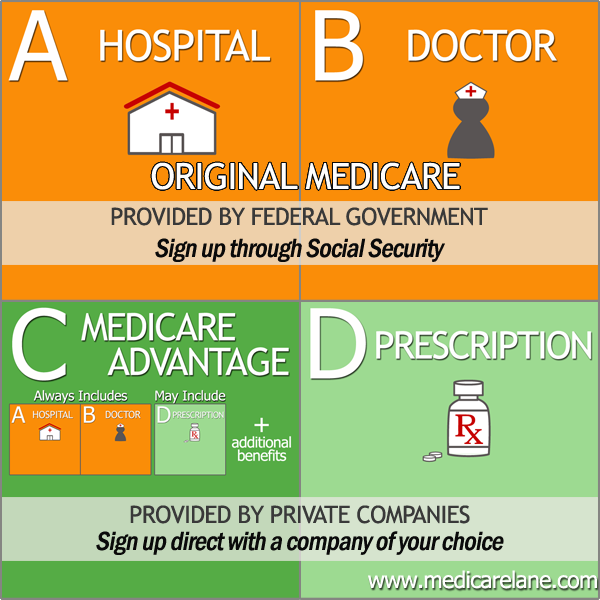
So what does this mean?  Well, if you meet the requirements, Medicare premiums you voluntarily pay to  obtain insurance in your name that is similar to qualifying private health insurance can be used  to figure the deduction.  This is applicable for all Medicare premiums (Parts A, B, C and D).

What if you paid premiums in the past but failed to take the deduction?  You can amend your previously filed return (if you’re within the 3 year window) to refigure and claim the deduction.  For more information, see Form 1040X, Amended US Individual Income Tax Return.

Never Say These 4 Words

If you’ve read our blog for any amount of time, you know that there are quite a few posts on here about dealing with adversity.  This mostly has to do with the fact that business is hard stuff and we like to share things to keep you motivated along your journey.  To that end, I wanted to share a few experiences with you.

A few summers back I got this crazy idea to ride my bike to four states in the same day.  While it was a challenge (hey, we’re talking about 200+ miles in a single shot) I managed to pull it off.  The funny thing is that when I relay that story to my non-cyclist friends, they often respond with something like “man, I could never do that.”

Recently I was watching some extreme sports type show with some friends and they ended up playing this Jeb Corliss clip of him “Grinding The Crack.”  In case you don’t know who Jeb is, he’s one of those wing suit pilots who jumps off cliffs and then “flies” back to earth.  Needless to say, after watching this clip, many of my friends were like “there is no way I could do that.”

Based on the comments to the two situations listed above, can you guess the four words you should never say?  Yup – I couldn’t do that.  Technically it’s five words because of the contraction, but you get the jest of it!

The reason one should never say those words, is because they are self limiting.  While it’s possible to assume what one could not do, you’ll never know until you at least try.  Here’s a prime example.  When I was in college I wanted to join a fraternity.  However, as with all “secret” organizations, I was a little hesitant because I just knew that they were going to make me do “something” in order to join.  What that something was, I had no idea, but all I knew was that I was apprehensive about it.

Without going into any real detail, yes, there were some things that had to be done.  Furthermore, some of those things one might think were impossible for one to do when initially presented.  However, I will say that despite what I perceived to be my own boundaries, those boundaries were in fact a lot further away than what I initially thought.  Or said another way, my limits were actually a lot higher than what I believed.  This led me to adopt the philosophy that you can do a lot more in life than you think you can.  Even if you are going through a really tough stretch in life, you can probably handle a lot more before you hit your breaking point.

Thus, the moment that you say that you can’t do something, you are limiting yourself.  If you say that you can’t learn to swim, you won’t.  If you say that you’ll never be able to climb Mt. Everest, then you never will.  If you say that you’ll never get your hobby up and running into the next big thing that society craves, then it just won’t happen.  But if you start out with a little hope and instead say “I think I can,” you might just be surprise at how far you can go.

Until next time…

How Much Does IRS Representation Cost?

broke

Everyone knows “ballpark” how much it cost to have their taxes prepared annually.  Sure there will be some variation if you do it yourself, or if you go to a chain store or if you go to a solo practitioner.  But that variation will be within a certain range.

When one has debt with the IRS and needs to hire professional representation, one may find that the fees quoted between various companies/firms can vary drastically.  It’s not uncommon for a person with a simple 1040 case where all returns have been filed but there is a balance due, to get quotes from anywhere between $500 up to say $6,000!

Why The Difference?
While two different cars will get you to the same place (i.e. the destination) in pretty much the same fashion, the price you pay for each could vary.  This typically has to do with branding, production processes and other factors involved in getting the car to the consumer (e.g. overseas vs. domestic production).

In a similar manner, the fees each tax resolution company will quote you will vary because of their infrastructure, sales model, overhead costs, etc.  A “Big National” firm that uses outbound telemarketing to obtain its clients will have a very different overhead structure than Plain Jane, CPA who uses direct mail and a referral structure to find her customers.  Who pays for the differences?  The consumer of course!

What Is Reasonable?
While it is hard to come up with standardized prices for the multitude of resolution tracks one may go down (i.e. Installment Agreement, Offer In Compromise, Currently Not Collectible), not to mention that the cost of working a particular track can be more/less complicated depending on the individual, here are some general guidelines to consider as a “middle ground” so to speak:

Base Fee: $500 – $1,000.  Most companies will charge a certain “minimum fee” in order to analyze your case, review IRS records/transcripts and ultimately determine the extent of the tax matter.  While this may not be explicitly called out in their fee quote, realize that it is buried in there in some fashion.

Straightforward 1040 Case: $1,000 – $4,000.  This would be in addition to the fees mentioned above.  This type of case involves back taxes, doesn’t usually involve an audit and could be either in the Automated Collection System (ACS) or it could be assigned to a Revenue Officer (RO).  If the work involves interacting with an RO and potentially satisfying some of their request, expect to be towards the higher end of the range where those dealing with ACS would tend to be towards the lower end.

Business Payroll Tax (941) Case: $1,000 – $6,000.  The variation in fees primarily will center around if the business is still operating or is closed (or about to be), and if there are Trust Fund Recovery Penalties that are being assessed to various individuals.  The more periods/quarters that are involved, the more expensive it will tend to be.

While the prices listed in this post are a little dated, they provide yet another perspective on how much one should expect to pay.

Nasty Little Industry Practices
While the following isn’t publicly broadcast, most tax resolution practitioners know that it exists.  Many of the “Big National” firms using unlicensed sales people (illegal, by the way) to obtain their clients, will use a fee matrix to quote fees.  This matrix is usually broken into $5,000 or $10,000 increments, and the fees are given for negotiating an Installment Agreement based on the tax debt amount.  Further, fees are added (typically $2,000 to $4,000) on top of the fee on the matrix if the customer is being sold an OIC.

It is also known that these same firms will later tack on a “rewrite” once the client is well into the process.  If you’re not familiar with the practice, it’s the lowballing of a fee in order to make the sale, then “rewriting” the contract later in order to get more money out of the customer. This is a highly unethical way to operate.

Have A Problem?
A proper consultation, conducted by a competent, licensed tax professional, will yield a complete picture of the taxpayer’s situation and what they need.  We offer our clients “flat fee” representation services that are rather affordable and include all the fees necessary to complete your case.  Likewise, the fee you will be quoted will be based on the amount of work required, not the amount you owe.   Thus, if you owe $15K or $115K, the amount we’ll charge will be EXACTLY the same, every time, as long as the circumstances surrounding each are otherwise the same.

Ready To Stop Shopping?
If you are ready to get “around to it” then visit this link, complete your information and before you know it, you’ll have a licensed representative on your side working your case.

Until next time…

You WILL Be Tested; In Life & Business

The THIRD time my car shut off!

The THIRD time my car shut off!

Life is not fair. Never is, never was and never was meant to be. Life is simply life. It doesn’t favor, discriminate or judge against anyone or anything. Life simply just happens. You either learn to roll with the punches or you’re destined to get trampled on.

This year has been particularly challenging for me on a few fronts. The business is going good, but is eating up more of my time (which is a good thing). But that makes working my contract gig a little bit stressful. Take that and throw in limited training time on the bike and my track season quickly fell apart. When you do limited riding to stay in shape, your weight goes up and your clothes get a little tight! To top it all off, throw in a little financial mayhem and things get really interesting.

Which brings us to last week. It was mid-week and I was headed to the contract as usual. Got about 15 miles into my 27 mile commute and in the middle of a downshift (on the expressway) the car cuts off. I mean, just shuts off for no reason! Needless to say, I got it started again and got back on my way to work…only to have it shut off again at the exit ramp where I pull off. Oh wait, it gets better. The pic above shows shut off number 3 on my way home and the car died once more as I was pulling it into the shop.

As of the writing of this post:
1. The car has been at the shop almost a week
2. They still don’t “really” know what’s wrong with it
3. I’m picking it up today to take it to another shop that does electrical analysis
4. Dropping off my daughter has been a little challenging this week

Needless to say, I have wondered several times over the past week just what I did to deserve this or who I made mad. I mean, I really could do without all this extra anguish in my life. But guess what? This is life kid; get used to it or get ready to get run over.

As humans, we often go through the whole “why me?” sequence whenever things aren’t going our way. But the reality is this; life and business don’t owe you anything other than one thing called opportunity. It’s up to you what you do with the opportunities that are given to you and no, no two individuals will receive the same ones. So when life seems a little hard, try and remember these things:

You Must Experience Trials to Appreciate How Good Life Really Is
If you didn’t experience pain, how would you know exactly how good joy feels? You wouldn’t. Thus, know that most of the trials you experience in life are temporary in nature and once over, you’ll be better prepared to appreciate the goodness that life has to offer.

Life Is Good
If you can answer yes to these questions then everything else can be solved:
1. Did you get up this morning?
2. Do you have clothes on your back?
3. Do you have a roof over your head (even if it’s only a viaduct)?
4. Do you have food in your belly or the ability to get some?

life is good

You Can’t Control Life
Life is like a casino dealer who deals out the cards when it’s your turn. Ready or not, when it’s your turn, Life will deal you your hand. Don’t like your cards? Tough luck, play the hand you’ve been dealt. Want some new cards? Maybe the next hand will be better (or worse). What about the player who just got an awesome hand? Worry about your own cards; you can’t change them and the other person is NOT you so it makes no sense to worry about what they’ve gotten.

I will get through this little car issue and some of the other things that are making life a little hard at the moment. But until things get a little brighter, I want to leave you with these quotes:

“You cannot control the length of your life, but you can control its breadth, depth, and height. You satisfy the hungry heart with gift of finest wheat. Now give to us, O saving Lord, the bread of life to eat.”

“You should not confuse your career with your life.”

“You spend your whole life believing that you’re on the right track, only to discover that you’re on the wrong train.”

“You will face many defeats in your life, but never let yourself be defeated.”

Is Your Tax Relief Company Reputable?

Scam-Poster

For those who are unaware, the tax relief industry is a highly fragmented one. Companies offering services to the public tend to be either one of the “Big Nationals” or smaller local practitioners. Well, in recent years, there have been some Big Nationals in the spotlight for reportedly violating consumer protection laws (e.g. TaxMasters, JK Harris and “Tax Lady” Roni Deutch). One other such company was American Tax Relief.

The FTC originally filed charges against American Tax Relief in September 2010. These charges included that the defendants falsely claimed they already had significantly reduced the tax debts of thousands of people and falsely told individual consumers they qualified for tax relief programs that would significantly reduce their tax debts. In the end, these clients paid in excess of $100 million for services and received minimal, if any, resolution to their tax problems.

Well, as a partial consolidation, the Federal Trade Commission said it is mailing more than $16 million in refund checks to 18,571 consumers who had paid money to American Tax Relief. All in all, these consumers will receive about 16% of the money the lost. The sad part is that many are still in hot water with the IRS; simply because they picked the wrong company to represent them before the IRS.

So how do you know if the company you are engaging to handle your case is reputable? Unfortunately, with loose regulation of the tax representation industry, you don’t. But here’s where we can help! If you visit our IRS Debt Representation page, you can receive our FREE whitepaper 5 Questions To Ask Any Tax Resolution Firm BEFORE Paying Them A Dime. On top of that, we’d also be happy to discuss your situation absolutely free of charge. Simply follow the instructions on the page and before you know it, you’ll have a professional representative on your side to help you stop your IRS worries for good!

For more details on the American Tax Relief case, check out Accounting Today’s article: Tax Relief Company Agrees to Turn over $16 Million to Bilked Consumers.

Tax Issues for Self-Employed Individuals

Wait, another tax?

Wait, another tax?

Many self-employed individuals are considered “sole proprietors” or “independent contractors” for legal and tax purposes.  This is true regardless of whether you are turning a hobby into a business, selling an indispensable widget or providing services to others.  As a self-employed person, you report your business revenue results on your personal income tax return.  The following are a few guidelines and issues you should keep in mind when pursuing your entrepreneurial spirit.

Schedule C – Form 1040
As a self-employed person, you are required to report your business profits or losses on Schedule C of Form 1040.  The income earned through your business is taxable to you as an individual.  This is true even if you do not withdraw any money from the business.  While you are required to report your gross revenues, you are also allowed to deduct business expenses incurred in generating that revenue.  If your business efforts result in a loss, the loss will generally be deductible against your total income from all sources, subject to special rules relating to whether your business is considered a hobby and whether you have anything “at risk.”  If it generates a profit, then you will have to pay taxes on it.

Home-Based Business
Many self-employed individuals work out of their home and are entitled to deduct a percentage of certain home costs that are applicable to the portion of the home that is used as your office.  This can include payments for utilities, telephone services, etc.  You may also be eligible to claim these deductions if you perform administrative tasks from your home or store inventory there.  If you work out of your home and have an additional office at another location, you also may be able to convert your commuting expenses between the two locations into deductible transportation expenses.  Since most self-employed individuals find themselves working more than the traditional 40-hour week, there are a significant number of advantageous deductions that can be claimed.  Unfortunately, we find that most self-employed individuals miss these deductions because they are unaware of them.

The Bad News  – Self-Employment Taxes
A negative aspect to being self-employed is the self-employment tax.  All salaried individuals are subject to automatic deductions from their paycheck including FICA, etc.  In that many self-employed individuals often do not run a formal payroll for themselves, the government must recapture these taxes through the self-employment tax.  Simply put, you are required to pay self-employment taxes at a rate of 15.3% on your net earnings, up to an annual income cap.  Beyond the annual cap, the rate is reduced to just the Medicare tax rate of 2.9%.

In an interesting twist that reveals the confusing nature of the tax code, you are allowed a partial deduction for the self-employment tax.  Simply put, you are allowed to deduct one-half of your self-employment taxes from your gross income.  For example, if you have to pay $10,000 in self-employment taxes, you are allowed a deduction on your 1040 return of $5,000.  Many self-employed individuals miss this deduction and pay more money to taxes than needed.

No Withholding Tax
Unlike a salaried employee sitting in a cubicle,  the taxes above are not withheld from your paycheck.  While this sounds great, you are required to make quarterly estimated tax payments.  If you fail to make the payments, you are subject to a penalty, but the penalty is not the biggest concern.  A potentially dangerous pitfall of being self-employed is failing to pay quarterly estimated taxes AND then getting caught at the end of the year without sufficient funds to pay your taxes.  The IRS is not going to be happy if you fail to pay your taxes and you will suffer the consequences in the form of penalties and interest.  Making sure you pay quarterly estimated taxes helps avoid this situation and it is highly recommended that you follow this course of action.  If you have encountered this situation for yourself, be sure to contact us immediately to help you remedy this particular circumstance.

Record Keeping
You must maintain complete records of all business income and expenses.  Simply put, document everything.  Create a filing system for each month and file every receipt, etc.  All business travel expenses must be documented, including auto mileage you incur when performing business tasks.  Office supply stores sell business mileage books that you can keep in your car and use whenever you travel.  There are even some apps for your phone that will allow you to push a button at the beginning and end of your trip and it will calculate the mileage for you.  If you have any doubt about documenting something, just do it!

As a self-employed individual, your focus and time is spent on making your business successful.  Your focus is not on the complexities of the tax code and how to limit the amount of taxes you owe.  If any of the information in this article is new to you, then it is highly likely you have paid far more in taxes than required.

By |2020-09-16T10:58:45-06:00July 29, 2014|Categories: Tax Talk|Tags: , , , , , , , |Comments Off on Tax Issues for Self-Employed Individuals

Employment Tax Penalties

When you hire employees to work in your business, you’ll quickly learn one of the unfortunate consequences; payroll taxes. These taxes not only include the amounts your employee asks you to withhold on their behalf, but your fair share of social security, Medicare and unemployment tax. If you make the payments on time, all will be well in the universe. Fail to pay timely, or not at all, expect the IRS will rain all over your parade.

If you have employees, you absolutely must deduct and withhold various taxes from their paychecks. Since you are deducting money from the employee’s paycheck, you are handling their funds. In fact, you are handling these funds in “trust,” meaning that they really don’t belong to you, they belong to the IRS.  This fact is very important to the IRS and it places great emphasis on any failure to deposit employment taxes.  We often tell clients, the IRS will take a few months/years to “come after” a taxpayer for late payment of income taxes. However, they will contact you and take “aggressive” collection action much sooner if the taxes in question are payroll related.

If you fail to pay employment taxes, you may be personally subjected to a 100% penalty. Yes, you read that right, 100%. Known as the “trust fund recovery penalty,” this penalty can be assessed against the person responsible for paying the taxes, not the entity. The person can be the owner, corporate officer or other “responsible person.” In short, a business entity is not going to protect you from the wrath of the IRS if you didn’t deposit your payroll taxes.  They will hold the “responsible person” 100% accountable for paying the taxes; even if the business is closed!

Cash flow crunches are an inevitable event for practically every business. So, what happens if you make a late payment for employment taxes?  Unless you can show reasonable cause for the delay, the IRS is going to penalize you.

Late payment penalties range in amount depending on the delay. If the delay is less than six days, the penalty is 2%. Delay for six to 15 days and you are looking at 5%. More than 15 days in delay is going to push the penalty to 15%. If you delay this long, the IRS will begin peppering you with penalty notices telling you where you stand.

The best solution to dealing with this is to get the money to the IRS as quickly as possible. If the amounts involved were significant and resulted in large penalties, you may want to consult with a tax professional to see if the penalties can be abated (i.e. forgiven). If you can’t pay the amounts owed, then you will definitely want to consult with a tax professional to review your options (i.e. installment agreement, offer in compromise, currently-not-collectible, etc.) and negotiate a “formal” resolution with the IRS.   Any of the above are matters that we can assist you with, so feel free to shoot as email or call us via the information listed below.

In closing, whatever you do, make sure you deposit employment taxes with the IRS in a timely fashion. Take a moment to think about the worst thing you have ever heard done by the IRS. If you fail to pay employment taxes, the actions taken by the IRS will be ten times worse and you will be the one telling the horror story!

Get Our 100 Ultimate Tax Tips FREE!

Ready to save mucho dinero?

Over the years we have seen people spend hours fighting over a $100 over charge by their credit card company, yet spend little to no time learning how to reduce their tax bill by thousands of dollars.  This little 10 page guide will take you less than 15 minutes to simply read from end-to-end.  It will take you a little longer to figure out what applies to your situation, but in the grand scheme of things it will still only be a few minutes.  But if you do the above two things, you may be able to literally shave thousands, if not hundreds of thousands of dollars from your future tax bills!

If you  go here and put your email address in the box, we’ll rush you this information packed guide for absolutely, certifiably the best price on the entire planet Earth; FREE!  Can’t beat that right?

What’s even better is that we’re 100% positive that you can find something in this guide that you can use.  Furthermore, these aren’t just some “foo-foo” list of tax strategies that you can find out on the internet.  No, these are proven strategies developed/researched over many years that are often overlooked, forgotten or simply not implemented.  Want a sample of what’s inside?  Here is just a taste of what you’ll get:

Business Start-Up Costs: Start-up costs are amounts paid or incurred for: (a) creating an active trade or business; or (b) investigating the creation or acquisition of an active trade or business. The fees you pay for can be written off/amortized over a period of 60 months or more.

Alimony: You may deduct the amount of alimony or separate maintenance in the year paid BUT, you must include in income the amount of alimony or separate maintenance you received.

IRS Statute of Limitations: Did you know the IRS only has 10 years from the date the tax is assessed to collect it?  But the IRS won’t tell you to stop paying them if the statute has expired; you’ll just have to know that you don’t have to pay them anymore.  Learn more in our post here.

Employing Your Children: You can hire and pay your children a reasonable salary to work in your business. Just make sure the job is within their ability and documented with a job description.  What’s more is the first $6,100 in wages (in 2013) will not create a tax liability for the child AND you can still claim them as a dependent on your tax return!

Business Clothing: Are you required to wear certain clothes as a condition of performing your job?  If they are not reimbursed by your employer AND not suitable for everyday wear, then the expense is tax deductible.  Wear a suit to court as an attorney?  Sorry, the IRS will probably disallow the expense if you claim it.

Go to Top