
Our 10th Year Anniversary!

Thanks for the past 10 years!
So this tax season was a little more challenging than anticipated; thus the reason this post is coming out in October. Needless to say, back on September 14, 2005 Wilson Rogers & Company came into existence. That means that 2015 marks 10 years of us being in business! A lot has happened in that time frame. So with this post, we thought we would not only recap our history, but just how we were able to make it that long.
2005
So after years of Jared getting “hey, your’re an accountant, I have a tax question for you.” he and Aaronita Wilson decided to start a tax company. “What are we going to call it?” was the question for a while. “How about we call it Rogers Wilson” Aaronita would say. “Nah, how about Wilson Rogers?” Jared replied. “Kind of sounds like a person. Some estately dude on a horse playing polo. It also sounds like another tax company we know…” And with that, Wilson Rogers & Company took form.
2006
This was the first year that we actually started doing returns for pay. Some of the key highlights:
- Mr. Asberry becomes “client number one” by sending us his information.
- Mr. Simpson becomes the first transmitted return as he was quicker to process than Mr. Asberry!
- Jared and Aaronita get married on September 22, 2006, thus effectively removing a person named “Wilson” from the company. Don’t worry, people still ask to speak to Wilson Rogers when they come to the office!
2007-2010
These were the “slow years” for the most part as there really wasn’t much that changed. Client levels stayed pretty consistent and revenues were largely flat. This was primarily due to the fact that both Aaronita and Jared maintained full time jobs within Corporate America. This would start to change in the following year.
2011
Sometime towards the end of 2011, the decision was made that Jared would leave Corporate America to head up our first “retail” office. Up until this point, all the tax returns were done “in house” by making appointments to pick up documents, preparing the returns at night and then providing the completed return to the client at a later date. 2011 was filled with decisions about health insurance, resignation dates and how to outfit the new office. Somehow, someway, it all managed to come together.
2012

Tax Season? Ready, Set, Go!
So this was the first tax season with the new office. If you want to read the recap on how it went, you can check that out here. Some of the things that you won’t see in this post:
- Mr. Campbell had the honor of becoming “retail client number one” on a cold day in January. He had all his paperwork…we didn’t have the nice frilly folders to give him his tax return in. Oh man…the early days!
- At the same time we were opening the office, Jared was moonlighting with the fine folks of Intuit with their Turbotax Ask A Tax Expert (ATE) team. It was also the year that he broke the wrist on his dominant hand and had to finish out tax season using his left hand. Talk about bad handwriting!
- We also took many steps into the marketing world to help get the word out. One of these included developing relationships with sites like Teaspiller (which was later acquired by Intuit)
2013
So we survived another retail office tax season. That recap can be found here. The one standout item for this year was that Teaspiller was purchased by Intuit and folded into the TurboTax brand. What that did was drive additional tax preparation business to us that was above and beyond what we had projected. It also continued Jared’s relationship with Intuit, which further broadened in late April when he became certified as a Quickbooks Proadvisor.
2014
This was the year that we hired “employee number one” so that Jared could have a little help. You can read all about Stephanie in a little interview that we did here. If you want to read about the season, that is located in this post. That post will also talk about how we began using bus benches to advertise to local traffic in our area!
2015
This was our fourth tax season with the office, and man did things really pick up. They picked up so much that we hired Patricia as “employee number two” to keep up with things. This was also the year that we launched www.fileoldtaxreturns.com to offer those needing to file older tax returns an option to do so.
How Did We Survive 10 Years?
Everyone knows the statistic that most businesses fail to make it to the 5 year mark. While we have been lucky enough to avoid the top 5 reasons businesses fail, we must admit that it takes a little more than that to last for 10 years. So what are the keys to the castle? In summary we think:
- Provide good service. If you don’t do that, you’ll be lucky if you last beyond a year.
- Value your customers. We have wonderful customers and we try to let them know that as frequently as possible. Without them, there would be no Wilson Rogers & Company.
- Stand out from your competitors. We’ve all heard that insanity is defined as doing the same thing over and over and expecting a different result. If you look, sound and act just like your competitors, expect to get their results – average! So be bold. Do things differently. Give the public what they want, not what YOU think they want.
- Make adjustments when necessary. Getting to 10 years has not been a straight line drive. We’ve had to adjust and pivot along the way. Have we made mistakes? You bet! Have we learned from them? Continuously. The key is to make adjustments when needed, forget the past and try to do better in the future. If you can do that (combined with the above points), then maybe one day we’ll be reading about how you survived your first ten years.
Here’s to a bright future!
What Is Depreciation Recapture?

The term “depreciation recapture” refers to the amount of gain that is treated as ordinary income upon the sale or other disposition of property. Gain that is treated as capital gain is not depreciation recapture. If you do your own taxes and you never heard of “depreciation recapture” – it’s time to get an accountant. If you already have an accountant and they never discussed “depreciation recapture” with you – you need a new accountant! Either way, this post will walk you through some of the basics.
A Simple Example
Let’s begin with an example. You bought a rental property in 2007 for $200K. True, this was right before the “great financial crisis” and your property is worth less, but that is besides the point (for the moment). In 2014, you manage to sell it for $175K. If life was simple, you could get away with the following calculation: your loss is the $175K sales prices less the $200K purchase price, or $25K. You held the property more than a year, therefore it’s “long-term.” Done right? Not so fast my friend.
Unfortunately, it is not so simple, and instead of having a loss, you actually have a gain. How come? Because of depreciation. Every year since 2007 you were depreciating the property, correct? Well, that depreciation lowered your tax bill and you received a benefit because of it. But if you think you got a free ride from the government, think again. What you were saving on depreciation comes back to haunt you now when you sell the property. So (for simplicity) let’s assume that each year you received $7,272 in depreciation. This is approximately $51K of depreciation over the 7 years. Thus, the building wasn’t really wrth $200K for tax purposes, but only $149K. SInce you sold the building for $175K, you really had a $26K gain!
It gets worse. Under “normal” circumstances, the tax rate on most net capital gain is no higher than 15%. Some may be taxed at 0% if you are in the 10% or 15% ordinary income tax brackets. However, a 20% rate on net capital gain applies in tax years 2013 and later to the extent that a taxpayer’s taxable income exceeds the thresholds. Furthermore, there are a few other exceptions where capital gains may be taxed at rates greater than 15%:
- The taxable part of a gain from selling section 1202 qualified small business stock is taxed at a maximum 28% rate.
- Net capital gains from selling collectibles (like coins or art) are taxed at a maximum 28% rate.
- The portion of any unrecaptured section 1250 gain from selling section 1250 real property is taxed at a maximum 25% rate.
In case you missed it, it’s that last bullet that refers to depreciation recapture. And yes, it’s taxed at 25% versus 15%!
The actual calculations can get quite involved depending on the amount of the gain, the amount of depreciation taken and the tax bracket you fall into. But once again for simplicity (and illustration), since you took $51K of depreciation, the entire $26K gain would be considered depreciation recapture and you could pay $9K in taxes related to it.
If you’re tired at this point, we don’t blame you. Albert Einstein is quoted as saying that the hardest thing in the world to understand is the income tax. As seen above, the IRS does a pretty good job proving his point!
Tax Planning Tips for Depreciation Recapture
So just how can you get out of depreciation recapture? The short answers is you can’t, but there are things that can help or delay it’s payment. For example, when a rental property is sold, any passive activity losses that were not deductible in previous years become deductible in full. This can help offset the tax bite of the depreciation recapture tax.
By the way, you’ve heard of 1031 exchanges, haven’t you? Next time, you may want to think about using one before you sell your property. When a rental property is sold as part of a like-kind exchange, both capital gains and depreciation recapture taxes can be deferred until the “new” property is disposed of.
There’s one tax strategy, however, that will not help. Since depreciation is recaptured when the asset is sold, it is reasonable that some people would think that by avoiding claiming depreciation they can also avoid the recapture tax. This strategy does not work, because the tax law requires depreciation recapture to be calculated on depreciation that was “allowed or allowable” (Internal Revenue Code section 1250(b)(3)).
Deducting Business Start Up Cost
Business organizational costs are amounts paid, or incurred, to create a corporation or partnership business entity. Start-up costs are those paid or incurred for investigating or creating an “active” trade or business. Start-up and organizational cost include:
- Analysis or survey of potential markets, products, labor supply, transportation facilities, etc.
- Expenses incurred while investigating the purchase of a business.
- Training wages for employees who will work in the business.
- Travel and other necessary costs for securing prospective distributors, suppliers, or customers.
- Cost of professional services, such as executives and consultants.
- Legal fees incident to the organization
- Accounting fees incident to the organization
- Filing fees.
If you need a template to track your startup or organizational cost prior to deducting them, use this one from the fine folks over at Score.com.
Deductibility.
Unlike expenses incurred as part of the normal ongoing operations of a business, one must “elect” to amortize (i.e. deducted over a period of time) organizational and start up cost in order for them to be deducted. The current rules allow for the following:
- You are able to deduct up to $5,000 of your qualifying start-up costs in the first year.
- The first-year deduction starts to phase-out $1 for $1 when your expenses reach $50,000. Once your expeneses reach or exceed $55,000, the first year deduction is fully phased out.
- Up to $55,000 of start-up expenditures can be deducted ratably over a 180-month period beginning with the month in which the active trade or business begins.
To aid in understanding how the above works, here is how you would make your first year deduction:
If start-up costs are $52,000, $3,000 can be deducted in the first year. You can amortize the remaining start-up costs over 180 months starting with the month business begins.
Making the Election Electing the deduction.
The election to currently deduct up to $5,000 of start-up or organizational costs (or both) is made by claiming the deduction on the tax return for the tax year in which the trade or business begins. Note that the tax return must be timely-filed, including extensions. Furthermore, no separate statement is required for making this election.
Electing to amortize.
The election to amortize start-up or organizational costs (or both) is made by filing Form 4562, Depreciation and Amortization, and completing Part VI. Make sure that you:
- Attach a statement listing a description and amount of each cost, date incurred (for organizational costs), month the business began or was acquired, and the amortization period (generally 180 months).
- Use separate statements for start-up costs and organizational costs.
Correcting an omitted election.
An election to deduct or amortize costs that was omitted on a timely-filed return (including extensions) can still be made by filing an Amended Return within six months of the original due date of the return (excluding extensions).
Chicago Minimum Wage Increase

In December 2014, the City of Chicago City Council passed an ordinance to raise the minimum wage for all Chicago workers to $13 per hour by 2019. The ordinance raises the minimum wage in steps, beginning with an increase to $10 per hour July 1, 2015. The minimum wage then increases to $10.50 in 2016, $11 in 2017, $12 in 2018, and $13 in 2019. Over the five year phase in, the increase is projected to raise the earnings for approximately 410,000 Chicago workers and lift 70,000 workers out of poverty.
Key Highlights
- The ordinance requires all employers to pay the new minimum wage of $10 per hour for all employees beginning July 1st 2015, subject to certain limitations. You can read more about the covered and non-covered employers/employees via this post.
- All businesses operating within Chicago and/or employing persons working within Chicago are required to comply.
- All employers are required to post this Notice to Employers and Employees in each place of business beginning July 1st and include the Notice in each employee’s first paycheck following the July 1st implementation date.
- The full text of the Chicago Minimum Wage Ordinance can be found here.
- The Chicago wage increase follows several other recently passed increases. For a list of the wage in effect in other states, check out this link.
- This increase is for the City of Chicago ONLY. The proposed wage increase for the State of Illinois appears to be on hold as of the time of this posting.
Marketing Your Service Business
Whether you are a seasonal tax preparer, a neighborhood car wash, a painter or a realtor, consumers can’t go a week without the services of a local entrepreneur. One the hardest parts of being in a service business lies in how you go about creating your market. As such, a sizable roadblock often encountered is how hard it is to promote a product that technically does not exist until the customer has made their purchase.
Listed below are 5 ways that you can promote your service business.
Make sure customers can find you. The vast majority of both male and female shoppers do research on the web before making a purchase. Furthermore, women shoppers in particular look for “deeper” information when deciding on which company or service to choose. For these reasons, having a company website is a smart and affordable way to ensure that your business and the services you offer can be found.
Let customers know you. Good relationships are built on trust. So it’s natural that customers want to learn as much as they can about your company and the people that stand behind it. Once you’ve created your website, why not consider integrating your blog into it? Studies (like this one) indicate that business blogging can lead to as much as 55% more site visits when compare to sites that don’t. But the real point of the blog should be to let customers know more about just who you are!
If you look at the category Who’s The Boss on our site, you can get some insight into our CEO Jared Rogers. Under this category, he showcases things about the company and his story, photos, family and hobbies. Why? So that you get to know more about him and see if his personality matches with yours. The reality is that most service businesses are differentiated not by their services, but by the people who provide and stand behind them.
Tout your USP or value proposition. What will make customers or clients select your company vs. your competitor’s? Many people choose the service provider that offers the greatest value for their money, as there’s often price parity among the principal players. Thus, one should craft their Unique Selling Proposition (USP) and communicate it to each and every prospect you interact with. So the best way to win business is not to cut your prices or rates, but instead add products or services that elevate your USP – making it too good to resist!
Offer your customers incentives. Customers who’ve had positive experiences with your company in the past will happily return. But tempting new customers requires making a special offer. Businesses that provide home services (e.g. rug cleaning, painting, home heating or air conditioning) can benefit by sending consumers coupons through a service such as Valpak. Your coupon offer will be mailed in an envelope with others, thus your cost of mailing is less than if you did it stand alone (thus allowing you to send to a greater number of people). Although you won’t have the undivided attention of your consumer, mail from a known marriage-mail provider is often well-received. For long-term results, create a offer that will motivate new customers to make more than a single purchase.
Communicate with your prospects frequently. It costs considerably less to keep a customer than to win a new one. Thus, it’s smart to maintain campaigns that upsell or resell to existing ones. To do this, you should communicate with your customer database at least every four to six weeks. If you don’t, you’re missing opportunities to grow your business. Now, every communication doesn’t have to be a sales pitch. What you are trying to do is create Top Of Mind Awareness.
In this post we talk about how you can get new clients via a referral program that emphasizes TOMA. Essentially, you want to use a combination of alternating sales calls with e-mail and postal mail. By interspersing e-newsletters containing case histories, postcards with promotional offers and calls offering relevant and valuable information, you will ensure that YOU are the one they think of when it’s time for them to make a purchase.

Click above to watch our Money Management and Tax Chit Chat video series!

Click Above For Your Top Secret Guide To Tax Reduction, Business Success and Solving IRS Debt Problems!
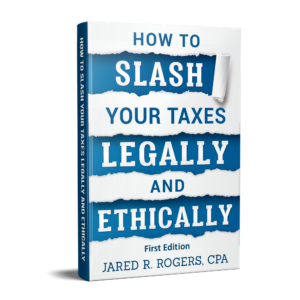
Click Above To Learn 111 Ways To Slash Your Tax Bill!