
Tricks To Audit Proof Your Tax Return
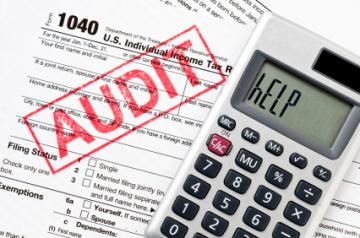
The one thing taxpayers dread!
In the past few years, Congress has passed legislation that is supposed to result in a more “sensitive” Internal Revenue Service. You know, one that is not such a lean, mean, tax-collecting machine. While we can say that this is somewhat true (hey the IRS really isn’t seizing houses any more), having been in this business for some time we do know there are some things the IRS doesn’t move on. And if you are in one of these high risk categories, then your return stands a greater chance of being selected for review or audit:
- High Wages
- Large Amounts of Itemized Tax Deductions
- Unreported Taxable Income
- Self-Employment
- Home Office Tax Deductions
- Unreported alimony
- Automobile Logs for people who use their car in business
A few months back, one of our clients (let’s call him Mr. Beegus) got one of those IRS “love letters” requesting some information about his return. To make matters worse, the IRS actually wanted to meet with Mr. Beegus in person to discuss the situation.
Mr. Beegus (a local business owner) was required to show up at the local IRS office with all his records. The IRS was questioning the legitimacy of several business deductions. With that said, the IRS was doing what it is allowed by law to do; demand that the taxpayer prove that those deductions were valid.
Turns out that Mr. Beegus lost the audit and ended up owing the IRS a significant amount of money – the additional tax, plus penalty and interest for late payment of that tax. Why did Mr. Beegus lose the audit? Well, he made two “classic” taxpayer mistakes:
First Mistake – “No Receipt, no deduction”
Mr. Beegus lost several deductions simply because he didn’t have the proper documentation to prove the deductions. What do we mean by “proper” documentation?
Well, if the IRS requires you to substantiate a deduction on your tax return, you must be able to provide written proof that the deduction really happened. The easiest way to prove a deduction is to hang on to:
a) The receipt or invoice
b) Proof of payment, which can be a canceled check, cash receipt, or credit card statement.
Mr. Beegus reported numerous deductions for which he simply didn’t have the documentation. No receipts, no canceled checks, no nothing. Turns out that Mr. Beegus was one of those “cash guys.” Maybe you know what kind of guy we’re talking about – he never wrote a check in his life, just carried a wad of cash around in his pocket. He paid for everything with cash, and never kept any of his receipts.
Every year he’d sit down with his wife and “remember” how much he spent on different things. No way to prove any of this, of course. He just had a “feel” for how much cash he had spent, and he had run his business for so many years that he just “knew” how much it cost to purchase certain things. Well, this is the kind of taxpayer that the IRS loves!
Despite the IRS being more sensitive, it really is true; if you can’t prove that you paid for something (with receipts, invoices, canceled checks, etc.), then you run the risk of them removing/disallowing the deduction in an audit.
One of the most common questions we’re asked by clients is this: “I know I paid for something, but I don’t have a receipt. Can I still report the deduction?”
Our response is usually this: “You only need a receipt if you get audited.”
At first, people don’t know if we’re joking or not. But the statement really does have some truth to it. If you don’t have the documentation to prove a deduction, you can still report the deduction (although ill-advised), because you only have to prove the deduction if you get audited. But if you do get audited, knowing that there are undocumented deductions on the return, be prepared to lose the deduction. Fair enough?
And here’s the other major mistake that Mr. Beegus made:
Second Mistake – Bogus/Fabricated Deductions
It turns out that Mr. Beegus wasn’t completely honest with us about some of his deductions. He reported deductions that simply were not real deductions. Here’s one example: Mr. Beegus owned several rental houses. These rental houses, of course, required maintenance and repair work. Many times Mr. Beegus would do the work himself rather than pay someone else to do the work.
Well, Mr. Beegus would estimate what he would have had to pay someone else to do the work that he did himself, and then he would report that amount as a deduction, even though he didn’t actually pay anybody to do the work.
In other words, Mr. Beegus deducted the value of his time – which is non-deductible.
This is an important point; you can never legitimately deduct the value of your time for work you did. You have to actually pay someone else to do the labor.
When it comes to preparing a tax return, sometimes people are tempted to push the envelope. They either report things they don’t have documentation for, embellish the numbers or completely put false information on the return. Like our president Jared says, it doesn’t matter who prepares your return. He’s not the one who will get the letter from the IRS, you the taxpayer will. At that point, it’s up to you to defend yourself as you were the one who signed the bottom of the return…
“Under penalties of perjury, I declare that I have examined this return and accompanying schedules and statements, and to the best of my knowledge and belief, they are true, correct, and complete.”
But, if you ever get a letter from the IRS demanding additional information, you’ll have nothing to worry about if you do exactly the opposite of what Mr. Beegus did. If you can properly document your deductions and assuming you have no bogus information, you’ll pass the audit with flying colors.
Top LLC Formation Mistakes
When you work in our profession, you see a lot of Limited Liability Companies (LLC) that were set up by others. Sometimes, “mistakes” are made in the formation process. What do we mean by mistakes Well, we mean that the LLC was set up or modified in a way that is actually going to cost the entity and owner unnecessary time, money or heartache.
Some of these mistakes are caused by entrepreneurs and investors trying to save money on accountants and attorney fees. Some – in fact, most of them – are made by attorneys and paralegal services… Professionals who should know better.
But enough whining. Without further fanfare, here are the top three mistakes that we see people make again, and again, and again.
Mistake #1: Forgetting about Foreign LLC Registration Rules
Read those tempting advertisements for Delaware or Nevada limited liability companies? The advertisements sound pretty good, but most small businesses shouldn’t use/create out-of-state LLCs or for that matter out-of-state corporations.
Here’s why: If you’re doing in business in, say, Illinois, you’re not going to be able to avoid state taxes by forming your LLC in, say, Nevada. The tax and corporation laws in your state will require you to register your out-of-state, or “foreign” LLC in the states where your business operates. Those same laws will require you to pay state income taxes in the states where you earn your income.
A couple more quick points: Large businesses do like Delaware for a variety of reasons – mostly having to do with how sophisticated the Delaware chancellery courts are. But this applies to really big businesses that will litigate in Delaware – not small businesses. And Nevada does offer corporations a no-income-tax haven – but you need to set up a real business presence there, with an office, employees, property – the whole schabang.
Mistake #2: Electing to be Treated as a C Corporation
An LLC is a chameleon for tax purposes, which is great. An LLC with a single owner can be treated as a sole proprietorship, a C corporation or an S corporation (assuming eligibility requirements are met.) An LLC with multiple owners can be treated as a partnership, a C corporation or an S corporation (again, assuming eligibility requirements are met.)
But just because you can do something doesn’t mean you should. And unless you’ve got expert tax advice from a CPA or attorney, you shouldn’t make the election to be treated as a C corporation.
The reason is that a C corporation is taxed on its profits. When those profits are distributed to shareholders (in the form of dividends), the profits are taxed again to the shareholders. By electing to be taxed as a C corporation, then, the LLC owners create an extra level of taxation. This is often what you hear people refer to as the “double taxation” penalty of setting up a company. Yet this mistake is easily avoided.
Mistake #3: Electing to be Treated as an S Corporation Too Early
LLCs can also elect to be treated as S corporations – as noted in the preceding paragraphs. And once a business generates profits well in excess of the amounts paid to owners for salaries, an S corporation election saves the owners big money – sometimes tens of thousands of dollars per owner per year.
But you don’t want to elect S corporation status too early – especially if the LLC is owned and operated by a single owner.
By electing S corporation status, the LLC needs to file an expensive corporate return, needs to begin doing payroll – even if the only employee is the owner, and may need to pay additional payroll taxes like the 6.2% federal unemployment tax. (This tax is levied on the first $7,000 of wages paid to each employee.)
Wait until your business is profitable to elect S status for your LLC. You patience will pay off in two ways: simpler accounting and less expensive tax returns.
10 ways To Cut Your Property Taxes

So here in Chicago, property tax bills were recently due. Some folks are paying more, some less. But exactly how can you lower your bill? Read this post to find out.
Property taxes are decided collectively by school boards, town boards, legislators, and other boards and councils. The tax rate is set by collating the amount of funds an area needs to meet their budgets. While some states are fortunate to get to vote on whether a property tax increases pass, most states do not put these issues to a vote of the people. The tax an individual pays is computed by multiplying the tax rate, by the assessed value of your property, and then deducting any applicable exemptions. As states and counties wrestle with budget issues, property taxes are at an all time high. Studies indicate that they have increased more than 35% in the past five years across much of the country.
So how are property values assessed? Well, by determining the property costs in any given area. Property is valued by studying the current sale price of properties in the area, costs to be incurred to replace the property, potential realization of property if it is rented, sold, or gifted, and the historical value of a property.
Thus, here are a few ways in which you could save on these taxes:
1. Check if the state you reside in is offering any rebates. For example, a money back rebate, energy rebate, capping of taxes, or home owners rebate; where under certain conditions you may be eligible to claim a rebate.
2. Ensure that the property is assessed right. This will ensure that you do not have to pay excess taxes. Assert your right to check you assessment report to ensure that there are no miscalculations, mistakes, or assumptions. If there is any doubt, put in an appeal. According to statistics almost 50% of property tax assessment appeals win some relief.
3. Check all exemptions allowed according to the law.
4. Buy property jointly with a partner or family member. This way both owners become eligible for tax rebates.
5. Check if your assessment is in line with other properties in your neighborhood. Check with the assessment office or with your neighbors themselves. It helps to know applicable laws. Use the help of a real estate professional to put together a file of properties similar to yours that have a lower assessment. Or, use the bank’s appraisal to support your case. Be sure that the case you gather together is water tight.
6. Use a property consultant to help you save taxes. Some charge a flat fee while others just a percentage of what you save. A professional will check how the assessment is done and also if there are any loop holes you can use.
7. There is strength in numbers. Get together with other owners who are also checking or fighting assessments, and work as a group.
8. Ask you home loan provider whether you are eligible for a refund of property taxes paid. Some agreements have a provision for this. Many mortgages have automatic escrow of taxes.
9. Even before you buy a home, find out what the property taxes are in the area and what have been the historical increases in tax rates.
10. Be sure to read through assessment and tax manuals published by your local authorities. These will give a clear idea of what parameters are used and what you must do to reduce or pay the correct property taxes.
In order to be in the “money smart” crowd, you need to get the help of an efficient and dedicated accountant, plan your tax liabilities well, and thoroughly understand all aspects of property taxation. For assistance with understanding your property tax bill, and appealing your assessment if you feel it is too high, please contact our office at 773-239-8850 to schedule an appointment to discuss your matter in confidence.
Innocent Spouses and Relief from Taxes

So picture this; you and your spouse ended on some “not so great” terms. You didn’t handle the finances and believed that everything was okay. Well, then this little letter from the IRS shows up saying that you owe tons of money in back taxes. Your heart sinks and you start contacting the IRS to find out what’s going on. That’s when you find out that your spouse didn’t file any of your tax returns for the past three years! What do you do?
When spouses file a joint tax return, they both sign that the information contained in it is true and accurate. If the information turns out to be false or inaccurate, the IRS has historically viewed both spouses as liable for the resulting assessments. If the associated taxes were not paid, the IRS would also look to both spouses to pay the delinquent amount. In worse case scenarios, this can include criminal charges for tax evasion.
Fortunately, the IRS has modified its view of the liability of joint filers. The IRS now recognizes that innocent spouses can’t control their deadbeat former spouses. Thus, it allows such innocent spouses to claim three types of tax relief:
1. Innocent Spouse Relief
2. Relief by Separation of Liability
3. Equitable Relief
If the IRS comes after you for the tax liability of a former spouse, you can seek tax relief under one of these three provisions if you meet all the following requirements. First, you filed a joint return with inaccurate information. Second, you didn’t know of the inaccuracies and didn’t have any reason to. Finally, taking into consideration the situation, holding you liable for the tax would be unfair.
The IRS will evaluate your application and render a ruling on it once all the facts and circumstances have been considered. The IRS may agree to simply waive any tax claim against you and go after the deadbeat spouse as the sole debtor. Alternatively, the IRS may split the tax liability into two separate accounts, only requiring you to pay one half of the amount due. While this may not sound great, it will immediately cut your tax debt in half.
In rare cases, you can seek equitable relief from the IRS. Equitable relief simply is another way of saying that making you pay the tax would be manifestly unfair. You must show you and the spouse did not transfer assets as part of an fraudulent scheme, didn’t transfer assets with the intention of evading taxes, didn’t intend to commit fraud, didn’t pay the taxes due and you didn’t know what your spouse was up to. Equitable relief claims need to be handled very carefully as the IRS views them with a very cynical eye. Nonetheless, they are a last step that can be taken when all else has failed.
$50 Tax Return Preparation? You Bet!
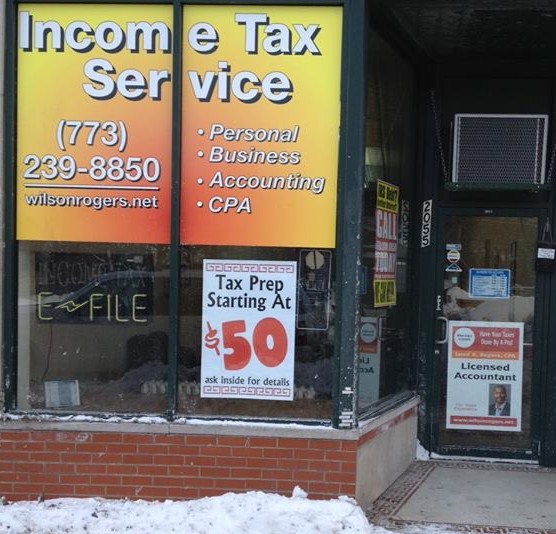
Keep more of your money where it belongs; in your pocket!
You work hard for your money right? Maybe you’re a high school or college grad working your first gig. Maybe you do quite well and lead a simple life with minimal “wordly” possessions. But doesn’t it leave you with a bad feeling when you have to pay $200 or more to get your “simple” return done?
Back when I first started doing returns for others, I actually cut my teeth doing them for those who didn’t make a lot. What I mean is that I was a preparer for the IRS Volunteer Income Tax Assistance (VITA) program. This program is FREE for those who qualify and it really humbled me; as I saw firsthand how little money some people have to survive on.
So when we opened up our retail office, I vowed that if you didn’t make a lot and your return was simple, you wouldn’t be charged a lot. Now what do I mean by simple? I specifically mean that you have to file form 1040-EZ. Not sure if you filed this form last year, then click here and compare it to your tax documents.
But in the essence of time, if you meet the following requirements, then know that you qualify for our $50 tax return offer:
- Your filing status is single or married filing jointly
- You claim no dependents
- You, and your spouse if filing a joint return, were under age 65 on January 1, 2014, and not blind at the end of 2013
- You have only wages, salaries, tips, taxable scholarship and fellowship grants, unemployment compensation, or Alaska Permanent Fund dividends, and your taxable interest was not over $1,500
- Your taxable income is less than $100,000
- You do not claim any adjustments to income, such as a deduction for IRA contributions, a student loan interest deduction, an educator expenses deduction, or a tuition and fees deduction
- You do not claim any credits other than the earned income credit
If you meet the above, why not save yourself some money this year? Give us a call at 773-239-8850 and we’d be happy to welcome you to our family!
Until next time…

Click above to watch our Money Management and Tax Chit Chat video series!
Click Above For Your Top Secret Guide To Tax Reduction, Business Success and Solving IRS Debt Problems!
Click Above To Learn 111 Ways To Slash Your Tax Bill!