
Tax Preparer Fraud – The Real Deal
When our office gets a “takeover client” there are a series of steps that we perform. In addition to the normal verification of identity, organizer completion and client interview, we also request a copy of the prior year return for review. We do this to obtain a glimpse into the clients history, but we also look to see if potential mistakes were made. Occasionally we find something that should be changed. Hey, tax preparers are human too and sometimes mistakes are made. But then, there are people like these who aren’t making mistakes, but are out to make a quick buck.
So, most people think of tax fraud as fudging the numbers a little. But the reality is it often involves the calculated manipulation of the entire return to generate a false refund. Okay, so what is the benefit to the tax preparer in doing this? The short answer is they get to charge a larger fee for their services and there will be less likelihood of the client balking because of the magnitude of the refund. This is particularly true if the preparer has a banking relationship that allows them to withhold their fees from the refund proceeds. So let’s look at the mechanics of how this works.
Client comes in and wants their return prepared. Let’s say they are also one of those 1) I need my money yesterday and 2) I am looking for a big refund. Okay, fair enough. Now let’s say that the preparer is one of those 1) we can get your money fast and 2) we’ll get you the biggest refund you’ve ever seen. Now this is where the interaction gets a little dangerous. Why? Because the scene is set for the preparer to potentially do things they shouldn’t and the client to turn a blind eye to things that they really should not ignore.
So what does the preparer do? The options are numerous. They could create fictions losses on Schedule C to reduce wage income to acceptable levels to claim the Earned Income Credit (EIC). They could create fictitious income on Schedule C to give a client who doesn’t work income so they can claim the EIC. Wage income could be reduced by bogus stock losses, falsely generated unreimbursed business expenses, nonexistent charitable contributions, etc.
So what is the end result? The client is often presented with a return where they are “guided” to the refund amount. The client is happy with what they are getting right? Typically, thus the reason they are okay with paying a fee that represents 4-10% of the refund. The disheartening aspect of this is that a $450 fee for a person who is getting a $4,500 refund is nowhere near warranted nor realistic. A $450 fee is one that is mostly associated with “complex” returns; meaning those that take a few days to work on and involve a lot of leg work.
So what’s the point of all this? Well, it’s twofold. Firstly, we all need to be aware that there are fraudulent tax preparers out there. Some will perform the above to keep a client while others will do it to get a nice check. If you figure that your average retail tax office does about 400 returns per season, if they are charging $450 for each of them, that makes for a nice $180K season. Secondly, if you encounter one of these preparers, you need to know that the responsibility for your return ultimately lays with you the taxpayer. While the IRS and Department of Justice will typically lock up a fraudulent preparer, they will come to you to get their money back. Furthermore, like we always say, the US Government never loses so it’s best to just do the right thing at the outset.
Until next time.
Emotions In Business? Getting Over The Fear of Failure.
So, my corporate career officially ended on January 13th 2012. During the time leading up to this date (as well as this first week out at the retail office) I had the opportunity to talk to lots of people about my transition. One of the recurring comments I encountered was how admirable it was to strike out on my own. This was often followed up with a statement surrounding how it must take guts to do it, or how that individual wishes they could take the leap. Because this topic came up on numerous occasions, I figured I would share my thoughts on just how I got to the point of walking out the door.
The History
My corporate career spanned over 12 years, 4 companies, numerous positions and a host of experiences. I enjoyed what I did and I would gladly do it all again. However, I can remember that even when I was young, I always envisioned running my own company. This dream remained squelched for most of my corporate career, but when I hit the 5-10 year mark, the voices in my head started getting louder and louder. If I was going to be true to myself, I owed it to myself to at least evaluate the option.
The Decision
Wilson Rogers & Company was founded back in 2005 as a side project. It grew over the years, but reached a point at which the growth became inhibited. This was largely due to the fact that the company had no full time operations nor did it have substantial market visibility. If the company was going to move into the next phase of existence, it was going to take full time dedication. Given the desire to move forward, it was decided that someone would need to take a more commanding reign of the helm.
Are You Crazy?
So it was decided that I would be the one to assume the driver’s seat. But just what was I doing? I was going to give up my “secure” corporate job in the midst of a recession to try and make a company work? I was going to “throw away” 12 years of corporate education to run a shop that takes little to no credentials to start? I was going to “waste” the money spent obtaining my BS in Accounting and MBA in Finance to work on a start up? Really? This is what I had spent all these years building my career for? To go and risk it on some unproven, unknown commodity that could potentially fail and leave me and my family in shambles?
The Rationalization
If I were to say that I didn’t doubt myself, I’d be lying one of the biggest lies in my life. Of course I doubted myself. Here I was about to strike out into the unknown and I worried if it would work. But through many encounters with people, reading lots of articles and books and just thinking through things, I got to a point where I said that I was the only one who was really standing in my way. But what about all those “are you crazy” questions? Here’s how I worked through them all:
- While we all think our corporate jobs are secure, we all know that the reality is far different. Ask those who worked for Lehman Brothers, General Motors, Tyco, Enron or Arthur Andersen. At any given moment, you can walk into the office one morning and be told your career is over. What I was giving up was not security but predictability. If I showed up to work every day and didn’t do something to get me canned, I could expect a nice direct deposit into my bank account every two weeks. Now, the checks come based on how hard I work and the flow is completely uneven. But if I can work hard for someone else, shouldn’t I be able to do it for myself?
- What about the recession? Being in the finance function of a company allows you to see how business is performing. Yes, the economy has been slow, but plenty of companies are actually GROWING during this time. There were 144 million individual tax returns filed in 2010. With that said, I figured that the market had plenty of space for a small company to come in and try to get just an inkling of the market. I mean, someone out there has to be looking for a new tax preparer or accountant right?
- Was I really throwing away my corporate education? No. It was my corporate education that in actuality prepared me to make this move. Additionally, I had 12+ years of knowledge in my possession. If worse comes to worse, I feel pretty confident that I can go back to counting someone’s money. It might not be the company I want to work for, and it may take a little time to happen, but I’m pretty sure my skills are worth something to someone out there.
- Yeah, anyone can start a tax preparation business. Someone with a High School diploma can start a bookkeeping business. But it takes someone with some skill to start an accounting, tax, consulting and personal finance company. The fear that I really had was what would people think of me (with all my credentials) starting what just about anyone on the street could do as well? In the end, it doesn’t matter what others think. What matters is what you think of yourself, and I figured that all of that education and credentials were just making me better prepared to strike out on this venture (vs. someone who didn’t).
The Fear of Failure
In business we are expected to act in the absence of emotions. However, the reality is that businesses are run by humans and we humans are emotional beings. Fear is a pretty powerful emotion, as it should be. The fear of falling is what keeps most infants from killing themselves. The fear of fire keeps all of us from burning ourselves. These are rational fears; those that are grounded in reality and pretty proven consequences. However, we all must be careful from allowing fear to hinder our possible growth, especially irrational fears.
When most people think of starting a business, the two biggest fears are 1) failing in their endeavor and 2) not being able to provide for themselves. At the onset, these are very rational fears. However, we tend to make the unknown bigger, badder and far scarier than it is in reality. Thus the fear of failing morphs into what will people think if I fail, what if I can never get another job, what if I’m no good? The fear of not being able to provide for yourself becomes what if no one buys our product, what if I run out of money, what if we go bankrupt, what if we wind up homeless?
Irrational fears are those that will keep you parked on the sideline of the best dance in the world. They’ll keep you from experiencing things that you have a passion for. They’ll even cause you to let life pass you by and leave you wondering “what if” in your dying days. But the reality is, irrational fears are just that, irrational. What if no one buys your product? True, this could happen. But how many people get their taxes done again? What if you fail? Tomorrow brings you 24 new hours to redeem yourself. What if you can never get another job? Really? Last time I looked I thought all burger joints were still hiring.
The point is this, yes, the possibility for failure exist in just about everything we do. And while a healthy dose of fear is good (especially to make sure you don’t run off unprepared or living in a vision that isn’t based on reality) we shouldn’t let it paralyze us. So get out there and try something new. Take a stab at following your dreams. Talk to that one person you’ve had your eye on but were too afraid to approach. The worst thing that can happen is that you fail, while the best thing? Who knows, but we owe it to ourselves to find out!
Until next time.
Is Married Filing Separately (MFS) Right For You?
Q: So I’m married but I’m not sure if I should file my taxes with my spouse. I’ve heard that I can file separately, but is there anything I should consider before doing so?
A: Most married folks just assume they should always file their taxes together. While this is normally the case (we typically advise married individuals to file together), there are some instances when it’s beneficial to file separately. If you are considering going the separate route, just know that it’s not necessarily equal.
Who Qualifies?
The MFS filing status is available only to those who are, well, married. But for those who tied the knot in 2011 (meaning those who were both single and married last year), this can be a little confusing. If you were married at the beginning of last year, you generally retain that tax status for the whole year unless you were divorced or separated under a decree of separate maintenance (same thing as divorced under the tax rules) as of Dec. 31, 2011. If you married during the year and were still hitched on December 31st, your options are generally limited to filing jointly with your spouse or using the MFS status.
Isn’t Filing Jointly Better?
Assuming you were in fact married at the end of last year, you may think filing jointly for 2011 as opposed to using MFS status is the no-brainer choice. Generally, the biggest reason to file jointly is because it eliminates the need to track and report each spouse’s income and deductions. Additionally, using the MFS status makes filers ineligible for several popular tax breaks that could save them dough if they file jointly (more on this later).
Filing jointly usually does lower the tax bill when one spouse earns a healthy amount of income while the other has little or none. That’s because the joint-filer tax brackets are exactly twice as wide as the MFS brackets. For example, the 28% federal income-tax bracket for joint filers starts at taxable income of $139,351 for 2011. In contrast, the 28% bracket for MFS filers starts at $69,676 of taxable income.
Using an example to illustrate, let’s say that Joseph and Mary earn a combined $100,000. Joseph earns $90,000 at his job and Mary earns $10,000 as she primarily works as a stay at home mother. If Joseph and Mary file together, their combined income puts them in the 25% bracket and their tax bill is $17,250. If they file separately, Joseph gets pushed into the 28% bracket and has to pay $19,235 while Mary is in the 15% bracket and has to pay $1,075. The result is the couple will pay $3,060 more in taxes by filing separately. So when one spouse earns quite a bit and the other not so much, filing jointly will usually cut their tax bill.
When to File Separate Returns
It’s generally advantageous to file separately when 1) both you and your spouse have taxable income, and 2) at least one of you (preferably the person with the lower income) has significant itemized deductions that are limited by adjusted gross income (AGI).
The three most common itemized write-offs that are limited by your AGI level are:
- Medical expenses, which you can deduct only to the extent they exceed 7.5% of AGI.
- Uninsured personal-casualty losses (like hurricane damage to your home), which you can deduct only to the extent they exceed 10% of AGI.
- Miscellaneous itemized expenses (usually nonreimbursed employee business expenses and investment expenses), which you can only deduct to the extent they exceed 2% of AGI.
When you have these types of expenses, filing separately can lead to tax-saving results, because the AGI numbers on your separate returns will be lower. Therefore, deductions that are limited by your AGI may be considerably higher when you file separately.
What You’ll Lose By Filing Separately
If you do decide to file separately, just know that the IRS is going to penalize you. With that said, you can’t claim any of the following if you use MFS:
- You can’t claim the child and dependent-care tax credit
- You can’t claim the deduction for college tuition and related expenses
- You can’t claim the American Opportunity/Hope Scholarship or Lifetime Learning tax credits for higher education expenses
- You can’t claim the student loan interest deduction
- You can’t deduct more than $1,500 of capital losses against ordinary income (compared to $3,000 if you file jointly)
- You can’t make a Roth IRA contribution if your AGI exceeds $10,000 unless the spouses lived apart all year
- You can’t convert a traditional IRA into a Roth account (prior to 2011)
- You must itemize deductions if your spouse itemizes (you can’t claim the standard deduction)
This list is far from exhaustive, which is why you should always have your tax preparer “run the numbers” to evaluate whether the MFS status might be beneficial.
It’s Never Too Late
If you discover that filing separately would cut your 2011 tax bill, it’s not too late to change your filing status even if you’ve already filed a joint return for 2011. Just file an amended return that substitutes two MFS returns for your original joint return. However, make sure you get the job done before the April 17th 2012 (due to the DC holiday) filing deadline. The IRS doesn’t allow you to file an amended return switching from joint to MFS status after the due date.
Is Retail/Professional Tax Preparation Dead?
So a few days ago we came across this year-end tax tips video from the fine folks who make TurboTax. However, what caught our eye occurs around the 2:40 mark. New for 2012, TurboTax will be offering free live tax assistance via Enrolled Agents, Tax Attorneys and CPAs. So what’s so significant about this? Well, before there is any speculation, you have to know the back story.
For many years, if you were preparing your taxes you either paid someone to do it or you would get the forms and do it yourself. Many of you will remember grabbing that pencil/eraser and spending hours filling out forms until you couldn’t stand it anymore. And if you don’t remember that, you sure remember your parents doing it! Well, with the proliferation and acceptance of the PC, the rise of tax preparation software began soon afterward. Now if you wanted to do your taxes on your own, you no longer had to spend countless hours to do so.
Gradually over the past 10 years or so, there has been a steady rise in the number of “digitally prepared” returns. The initial assumption is often that the increase is due to a market shift from retail to online preparation. However, Internal Revenue Service statistics show that the growth in digital preparation, which has overwhelmingly benefitted TurboTax, has largely been at the expense of pen-and-paper preparation. Assisted preparation has remained about 60 percent of the market for the past decade, while do-it-yourself has stayed at roughly 40 percent.
So if the market share has remained unchanged, why does it seem like retail preparers have been struggling? Well the short answer is through the loss of certain complimentary bank products (e.g. the Refund Anticipation Loan or RAL), retail preparers have seen revenues decline. Combine that with the fact that the sluggish economy means stagnant job growth (which translates into stagnant tax return growth) and the result is flat to declining performance at your local tax shop. Thus the performance declines of the Blocks and Jackson Hewitt’s of the world really isn’t a result of customer shifts, but more so poor product performance.
So back to the original question, why is Intuits move to hire tax professionals significant? Well, we believe the answer is twofold. Firstly, if the market has always been heavily skewed to assisted or retail preparation, then those customers have been conditioned. When that customer switches to a digital DIY solution and encounters a problem, what is the result? They’ll either call customer service, the IRS or a friend in search of an answer, and in extreme circumstances they may give up on the product and go back to assisted preparation. Thus, we believe that Intuit is trying to address these facts so that converts to their product have a positive experience and will become repeat customers.
The second part of the answer is a little more speculative so it needs to be taken in that context. Over the years, technology has become more integrated into our lives. With that, the ability for the customer to service themselves from any and everywhere has also increased. This has resulted in the decline of the explicit need/desire of customers to venture to a brick and mortar location. Retail tax preparation has lagged on addressing this and hasn’t been quick to embrace “online” service solutions for delivering their product. With that said we believe Intuit is trying to secure market share in what may be the next emerging tax preparation distribution channel; online assisted preparation.
Will this become the “future” in terms of how individuals have their returns prepared? Who knows, but if history is any indication, the retail channel probably won’t retain its prominence in the years to come. While there will always be a need for certain individuals to visit a physical site (e.g. individuals without access to technology, small businesses, etc.), ultimately you will probably see an increased shift towards some hybrid model. Thus the answer to this posts question, we don’t think retail/professional tax preparation is dead, we just think it’s evolving.
The Gauntlet
Well, back on December 1st we were meeting with the leasing company inking all the paperwork for our new retail location. No sooner than the ink dried, we then realized that we had just about 30 days to get the space ready. This would be no problem for a company with deep pockets, or one that had a development team for that matter. Our reality, on the other hand, was that we had limited resources; no matter what the item, we were limited in it. So with that said, we began our quest to outfit our office!
We already had a budget outlined and knew just about everything that needed to be purchased. So during the first two weeks, it was simply a matter of scouring the internet for the items and driving around to tons of places. The good thing is that there were plenty of people offering items, so we didn’t have a problem finding what we wanted (and at good prices too). The disheartening thing is that many of the items were from businesses that were folding. The bright spot for us is that we knew we would be putting the items to good use in our office, so they would get to serve their intended purpose.
Then there was the phone installation. This went relatively smoothly and thus set us up for all of our technology installations. Yet, that’s when we had two minor setbacks.
The first issue was with the security system. Now, we didn’t have a problem with the actual install. However, when we budgeted for the service, we failed to budget for the equipment charge. Whoops! Looks like we need to cut some items from our budget if we’re going to stay on track. So here is lesson number one for anyone starting a business – make sure your budget and figures are double and triple checked (preferably by someone other than the person who prepared it).
The second issue was more of a technicality that we forgot about, but it could have pushed back our computer set up. You see, when you electronically file returns with the IRS, you have to have an EFIN. Check. For each location. Dang it! So the fix is to go to the E Services site and fill out a new application. Check. But your account hasn’t been used in a while so it’s inactive. Drats! No worries, you just need to reactivate it. Check. But then you need to confirm it with a code that the IRS will send in the mail between 1-28 business days. Come on!
Well, needless to say, we got everything squared away with the IRS and got a new EFIN so that we could transmit returns from the new office. We still needed to get some things updated with our software providers accounting department, but that was minor in comparison to the above. So lesson number two for anyone starting a business, build a little cushion into the start up timeline. There will always be something unexpected that comes up; luckily for us it just cost us time, but for some it actually costs them money.
So after a month of hard work, this is what we have to show for it:


The office will have weekend hours between now and January 15th, but moves to a full time schedule starting Monday January 16th. We’re sure there will be other “set up” items that will come up during the tax season, but we’re happy this chapter of our existence is now squarely behind us. Next? Day-To-Day Operations! Until next time.

Click above to watch our Money Management and Tax Chit Chat video series!

Click Above For Your Top Secret Guide To Tax Reduction, Business Success and Solving IRS Debt Problems!
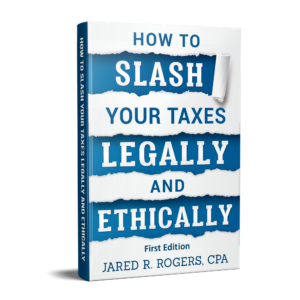
Click Above To Learn 111 Ways To Slash Your Tax Bill!