
The Importance of “Follow Through” in Business
So there you are, sitting at your desk when the phone rings. You pick it up and guess who it is? Your next “potential” customer! They’re interested in doing business and want you to send them a quote. Sounds simple enough right? So like any customer service oriented individual does, you send them the quote and go about your day.
For most small business owners and employees there is never a shortage of tasks to handle. For every customer who is simply prospecting, you have one who wants to purchase your product or service right now. What typically winds up happening is that you shift your focus to the paying customer and the one who was prospecting? Unfortunately, they usually wind up lost in the shuffle.
Now, what separates the stellar businesses from those that are merely successful is a little thing called follow through. It’s not all that hard to implement and in the end, it can yield substantial results. Here are some important things those in charge of your company’s sales or marketing function should keep in mind.
Single exposures don’t seal deals. Most potential customers won’t make a decision based on one sales or marketing exposure. Thus, follow-up contact is essential to success. Sales companies have found that a customer needs, on average, seven exposures to a product or service before responding.
Implement a system. The buzzword being thrown around these days is customer relationship management or CRM. Stated simply, CRM typically involves technology to organize, automate, and synchronize business processes – principally sales activities, but also those for marketing, customer service, and technical support. The goal is to find, attract, and win new clients, nurture and retain those the company already has, entice former clients back into the fold, and reduce the costs of marketing and client service. While you don’t have to fork over loads of money for a fancy CRM system, you should at least have a way to 1) track who contacted you, 2) capture what was said during each contact and 3) remind you to initiate follow up contact.
Customers get busy too. Often times business owners don’t want to follow up for fear of coming across as badgering or being a pest. Yet, sometimes a customers lack of response is simply because they’re busy. A friendly reminder or two, is sometimes all that is needed to prompt them to contact you and move forward.
Ask for the sale. Too many small business people lose thousands of dollars in sales every month because of one simple mistake; they don’t ask the customer to buy! The easiest way to do this is to ask them an involvement question that doesn’t allow them to answer “no.” For example, you could say “Okay (name), based on what you were looking for, how do our services fit with what you had in mind?” If they say “it fits perfectly!” you can go straight to “Okay, we just need a deposit of XX dollars. Which credit card would you like to use…”
Don’t forget your existing customers. Marketing expert Dan Kennedy recommends a 10-12 step MINIMUM “touch” with your clients and selected prospects every year. During these interactions, you’re NOT selling them something … but rather giving them useful information to further your relationship. The competition is always trying to seduce and woo them away from you. If you fail to remind them why you’re important and valuable, you could unintentionally send the message that you aren’t, which is not what you want. So make sure you regularly engage your current customers; it shows you value the relationship and who doesn’t like to be appreciated?
Saving For Retirement in an Uncertain Market
Q: In these uncertain times it’s a little hard to know how to manage our retirement savings. Is there anything that we should be doing different? If so, what do we change?
A: In August and September of 2011, there were some episodes of volatility present in the stock market; the likes of which we haven’t seen since 2008/2009. These were, for a large part, due to three specific events: the European debt crisis (which just doesn’t seem to want to go away), the political issues that surrounded the debt ceiling and finally the downgrade of the U.S. debt.
These bouts of volatility are often followed by a rash of media coverage. This is often accompanied by your average investor wondering what they should do, if anything. Some people will begin to shift their portfolios while others will simply stay the course. Which action is correct? To help determine the answer, let’s take a look at four topics.
Perception vs. Reality The media often makes it appear as if during turbulent times, investors are entirely selling out of one area and jumping into another. While there may be individual investors reacting and moving out of equities and into fixed income or money markets, when we look at the statistics and data, we see that the vast majority of investors stay the course.
Behavioral Finance This field of study combines psychology and economics in an attempt to explain why and how investors act and to analyze how that behavior affects the markets. Behavioral finance theorists point to the market phenomenon of hot stocks and bubbles to validate their position that market prices can be affected by the irrational behavior of investors. What this means in short is, when the markets move around or act in an irrational manner (read volatile), individuals tend to respond accordingly. This may not be the right course of action, but it happens.
Maintain A Sense Of Balance One of the best things to do in volatile times is to maintain a balanced portfolio. Sounds too simple right? The reality is that it works. According to Fran Kinniry of the Vanguard Investment Strategy Group “even from the peak of the market, a balanced investor is still positive. And when I say, “balanced,” I mean someone who has a combination of equity investments and fixed income investments.”
For those who struggle with this from an individual standpoint, let’s take a look at it from the market perspective. Let’s say you have $1,000 that represents all of the investment money in the economy. Then there are three pails on a set of scales, which represent the sectors that can be invested in (stocks, bonds and cash instruments). We can put the money into any pail we choose, but the equilibrium between the others will change. What this means is that one area will make money while another loses it. Yet one thing will remain unchanged, the amount of money in the market.
Thus, ones best bet is to spread the money around so that when you lose a little in one area, you’ll gain it back in another (and as a whole you shouldn’t be impacted too much). The problems arise when all of your eggs are in one basket, such as when you are nearing retirement. If everything you have is in stocks or bonds and the market goes through a prolonged period of adjustment, you may not be able to react fast enough to save your nest egg from severe losses. Thus, a little asset reallocation may give you that level of protection that you need.
Calculated Market Exploitation Maintaining a balanced portfolio doesn’t mean that you ignore trends or where the money is being made. However, what an investor should strive to do is indentify the trends, but don’t attempt to bet the house and ride a wave. By the time an investor decides to jump into an area that is “hot” or appears to be making money, the reality is that all of the “real” money has been made. What will remain are the speculators and more often than not, these will be the people who get burned when the market can no longer sustain the inflated prices.
A slightly more realistic approach would be to take a portion of your portfolio (that you won’t miss if things go south) and put it into a general area that encompasses the trend. For example, gas prices don’t look to be falling anytime soon. With that said, investing in an exchange-traded fund (ETF) that deals with energy might be a nice hedge in your portfolio. Energy will probably always make some money and we all know that these companies tend to pay out dividends. So while you’re not betting on a specific company or stock, you are inadvertently benefiting from investor and market trends.
Business Plan Essentials
Q: I’m attempting to seek funding for my venture and I’ve been told that I need a business plan. I was told there were some key things to include if I was going to make it “investment-grade.” Could you tell me what specifically this refers to?
A: We have assisted people with their business plans for many years. It’s common for individuals to ask us if they really need ANY business plan unless they are looking for an outside investor. Our response is that a business plan is needed primarily by the individual and secondarily by investors. For an individual, your business plan serves as the blueprint for your company, a way to gauge progress and a communication tool for your idea. For an investor it serves as an evaluation tool to determine if the venture is worth their time and money. So what do investors want to know? The following 10 items will give you some food for thought.
What’s the problem? Every plan must start with the problem you’re solving. Explain it in terms your Mom would understand and quantify the “cost-of-pain” in dollars or time. Statements like “every customer needs this” and “next generation platform” should be avoided as they are too vague. Be very specific in what the issue is because investors want to know what the need is. If you can’t define the problem you may scare away those who can fund your concept. No investor wants to wait years for their payback or fund the time it takes for you to figure out the market need.
How do you solve said problem? This is where you give an explanation of how and why your concept works, including a customer-centric quantification of the benefits. Skip the technical jargon but do describe your intellectual property and “secret recipe” in this section. Clearly define the customer, channel, and revenue model associated with the solution.
How big is the industry and market? Start with the evolution of the overall industry, market segmentation, market dynamics, and customer landscape. Remember that investors like industries that have a billion dollar opportunity, and a double-digit growth rate. Data from accredited market research groups is required for credibility. Also, don’t fall into the typical trap that most entrepreneurs make. Don’t define the market opportunity so broadly in one breath and then in the next assess your competition narrowly or nonexistent. Investors aren’t impressed by claims that everyone on the planet needs one but no one else has exactly the right features to compete with you.
What’s the business model? Tell people how you will make money, who pays you and what your gross margins will be. Be passionate, but realistic, about revenues, profits and volume growth. Try to avoid generalizations such as “all our concept has to do is get 1% of the market.” There are two issues with a statement such as this. First, no investor is interested in a company that is only looking to get 1% of a market. Remember, they want to fund something that will earn them a return on investment (ROI) and a substantial one at that. Second, that first 1% is the toughest part of any market to capture so you’ll look naïve implying it’s easy to get.
What’s your competition and sustainable advantage? Tell investors just who your competition is (both direct and indirect) and make sure to include customer alternatives (i.e. complementary products). Asserting you have no competition is about as credible as the Easter Bunny and will get you laughed out of a room faster than you want. Make sure you detail out your sustainable competitive advantage and highlight any barriers to entry that will keep your competitors at bay.
Another common mistake that entrepreneurs make is that they downplay big competitors as being “too big/slow to be a threat.” The reality is that big companies are often not a threat when the market is small. However, investors know that sleeping giants wake up the moment your company shows traction in the market place. Competing with PepsiCo, Microsoft, P&G and other large companies should never be minimized.
What’s the plan for marketing, sales and strategic partners? Describe your market penetration strategy, sales channels, pricing, and strategic partnerships. This is also a good place to include a rollout timeline with key milestones. Convince investors that you have lined up sales channels, strategic partners, and a viable marketing strategy.
Who’s calling the shots? Investors invest in people, not just ideas. Convince investors that your team is experienced and have great expertise in the selected business concept or industry. If all the members have no experience in the area where the concept will exist, highlight the expertise of the board of directors, advisory members or other strategic partners. If you are brining someone in from the outside, be careful with statements like “A world-class CEO will be joining us after funding.” Rest assured that potential investors will ask for names, and place some calls. Soft responses from your candidates will definitely kill your credibility.
How much money do you want? This is where you want to show how you calculated the funding requirements and how you plan to use the funds. Quantify existing skin-in-the-game from insiders and outsiders, including sweat equity and capital. If available, include a current valuation estimate as third party analysis always goes a long way in establishing viability. If you are doing your funding estimate, follow this simplistic approach: model the volume, cost, and pricing parameters based on what you believe is achievable and note where your cashflow bottoms out. If it bottoms out at negative $600K the first year, add a 25% buffer and ask for $750K funding.
What do the financials look like? Project both revenues and expense totals for next five years, and past three years, if relevant. Show breakeven and growth assumptions. Details should be available in a separate financial model, but do not need to be included in this particular section (i.e within the Appendix). Remember that investors are looking for large, scalable, high-growth opportunities. Attractive deals show double-digit positive growth per year and revenues that are projected to $20M or more within five years.
How do we get our money back? This section outlines your exit strategy and is only really required when you expect outside investors. Investors want to know that you are thinking about a liquidity event (e.g. IPO) and when/how they’ll get their money out (with a hefty ROI of course). For a family business it isn’t necessary to project an exit, but you should always think of what your “end game” is for a business. Most business owners don’t make a ton of money when the own the concept, but see the return when they sell it off, take it public, etc.
In summary, an investment-grade business plan is a professionally prepared document, preferably about 20 pages, to satisfy both angel investors and venture capitalists. In preparing it, try to look at your project through the investors eyes. If your plan is missing one or more of the above elements, it will likely be deemed not “fundable” and rejected. The best plans are not usually the fanciest or the longest. They are not measured by the quantity of impressive graphics or the size of the revenue projections. Investment-grade ones attempt to answer every question an investor could possibly ask, except maybe “where do I sign?”
A Day In The Life of a Small Business CEO
So what’s it like to be the CEO of a small or developing business? The answers are probably as varied as the individuals that head these organizations. Yet the one common thread which I’m sure we all have in common is this; you’re responsible for everything. Let me elaborate.
When I worked a “corporate” job, there were all types of functions to take care of various tasks. The folks in Marketing made all those fancy advertisements. Sales guys and gals made sure the money keep flowing in. Legal dotted the I’s and crossed the t’s and made sure no one did anything to get us in a bind. IT kept all the systems humming along and fixed them when they went down. Security kept the riff raff out of the building. Maintenance made sure that the lights worked right and when something broke it got fixed. The list goes on and on.
Now when you are the CEO of a small business, you assume all those roles and functions simultaneously. I remember recently a good colleague of mine saw my title change on LinkedIn (to CEO) and sent me an email congratulating me. I jokingly responded, don’t be fooled by the title, CEO really just means Chief Everything Officer! So what is a “typical” day in my life like now that I’m at the helm? Let’s take a look and see.
5:20AM Time to get up and get ready to go. My wife travels a good deal of the time so that often means I have to drop our daughter off at day care. We’re out the house at 5:40AM and I’m typically back at 6:20AM. From there it’s time to get ready for my commute (I bike to work) and get headed over to the office. The biking to work serves two purposes. One, it allows me to save on gas and conserve that every dwindling savings of mine. Two, it allows me to get my race “training” in as I often don’t have the time to do full workouts (hey, you make do with what you can get done and move on).
8:00AM I’m typically walking in the office around this time. First task is to get all the computers and printers going while I get cleaned up and changed into my “office duds.” Once I’m ready to go, I have to get our “Uncle Sam Air Dancer” up on the roof so that passing drivers will notice that we’re even there. Yeah, the office has signage, but you’d be surprised at how much you drive by places a thousand times and never realize that they even exist.
8:30AM Doors are open, neon signs are on and it’s time to go to work. The first two hours of the day typically involve me responding to customer emails, returning calls, scheduling the work load for the day, sending out prospecting calls/emails, etc. This is a bunch of administrative stuff that has to get done, but unfortunately I can’t focus on it for too long because I have to eventually do the work that brings in the checks.
Noon Maybe I stop and cram some food in my face. Maybe I keep working on cranking out the work. Maybe I am talking face-to-face with a customer. Eventually I will get to eat something, but there really is no such thing as a “lunch break” anymore.
6:30PM Time to close up shop. The day is typically too short and there is always something left to do. I try to table it until the next day UNLESS it involves a customer. Customer service is essential to building a good brand name and it happens with each and every client interaction. Mess up once and you’ll pay for it more than you even want to imagine.
7:30PM If my wife is home then this marks the time when I can begin family time. If she’s gone then I have to go and pick up the kid first. Either way it goes, from now until about 10PM it’s me getting my daughter and I ready for the next day, getting food on the table, getting ready for bed and then eventually falling asleep by “accident” as I put my daughter to bed.
Now, if you read above, no where will you read that I talked to my friends, checked my personal email, checked my Twitter timeline, yada, yada, yada. Is that because it didn’t happen? Nope. It’s because it didn’t happen while I was AT work. When I get home, I get a few minutes here and there to do those things. But when I’m at work, if it’s not a revenue generating task, it gets to wait. Like the old adage goes, nothing happens in business until you make a sale. That’s why in corporate America you typically work in a “cost center” as opposed to a “profit center.” This is also why the sales folks often get paid a boatload of money, because they actually make the business happen.
Lessons Learned?
So what has this transition taught me so far? Well, I’ve had plenty of “Ah ha” moments and I’ve also gained an appreciation for many things. But it I had to pick a few of my best lessons, I would say:
There’s Never Enough Time The day goes by too quickly and there is ALWAYS something to do. Most of this “something” has nothing to do with making money, but it never goes away and if you stop doing it, you more than likely will run out of or lose your customers.
You’re Emotions Are Always On From the time I get up to the time I go to sleep, I am always thinking of the business. Things go right, things go bad and in the middle of it all, there I stand. I often don’t have time to relish in the moment of anything that happens. But what I will say is that no matter what’s going on, I’m always feeling it until the minute I go to sleep.
You Don’t Know Jack Yeah, you know how to make the product you sell or deliver the service you offer. You might be good with computers, but there will be a time when something goes wrong and you will have to fix it (or call someone to). With that said, you are always learning. No matter how much you know about each function, you will always be learning more about it. And even if you do know about the function, you will always be learning about tasks. For example, you may know marketing, but it may take you a few attempts to “learn” which ad actually drives traffic through your door.
It’s Always An Adventure For those of you who like change, then this job is definitely for you. No two days are exactly the same. Every day you will be pushed to your limits in terms of learning, flexibility, time, skills, etc. It’s both fun and scary at the exact same time. There is no “Oh, I’ve learned everything in this role and now I’m board. When is my next rotation or promotion?” Instead there is “Wow, how do I figure this one out? And once I do, what’s around the bend?” But this is what makes being a CEO one of the most rewarding roles out of all the ones I’ve previously had.
Until next time.
Is It Ever Too Late To Start Saving For Retirement?
Q: I’m 37 years old and really want to start focusing on my retirement planning but feel it may be a little too late. What should I do?
A: It’s never too late to start planning for retirement. The key is to not waste any more time once you make up your mind it’s what you want to do. In short – get on the ball now so you make up for some of the lost time and retirement dollars you’ve been missing out on. The following will provide you with the financial steps you should take according to your age and possible allocations you could have in your investment portfolio. If you find that you’re past a certain stage, work on getting caught up with the goals of the previous timeframe and get back to your stage goals as soon as possible.
20 to 29 – You’re young; you’re starting your career; you’re broke.
- Start your 401(k) at work. Contribute at least up to the company match, if any.
- Start a Roth IRA if you don’t have a 401(k) – or if you have a 401(k) and can afford a Roth, too. You can tap your Roth for a first-time home purchase, if needed and you can withdraw principal penalty-free.
- Start an emergency fund – six months of take home salary being the minimum. If you don’t have money saved for a rainy day, you’ll have to go into debt for emergencies — or tap your retirement fund.
- Make a living will so your family will know your wishes in case of a health emergency. You’ll need one when you retire, but you never know what will happen in the meantime.
- Your Portfolio – Standard & Poor’s 500 stock index fund 50%, Small-cap core stock fund 25%, International stock fund 25%
30 to 39 – You’re still young; you’re starting a family; you’re in debt up to your eyeballs.
- Don’t reduce your retirement savings to save for the kiddies college fund. You can finance college with student loans and scholarships; you can’t finance retirement.
- Use your 401(k) to help you save and pay less income tax. A 401(k) lets you save money before taxes. Suppose you’re in the 25% tax bracket, earn $50,000 a year, and want to save $3,000 a year. Because of the tax savings, that $3,000 would reduce your take-home pay just $2,225 and cause you to owe less income taxes because your tax base will be reduced.
- Don’t confuse whole life insurance with a retirement plan, says Peggy Ruhlin, a Columbus, Ohio, financial planner. “Life insurance is good, and you need it to protect your family. But it’s not for retirement savings.”
- Write your will. You never know.
- Your Portfolio – Standard & Poor’s 500 stock index fund 50%, International stock fund 20%, Small-cap core stock fund 15%, Mid-cap growth stock fund 15%
40 to 49 – You’re middle-aged; you’re doing OK; you’re starting to get worried.
- If you’re not contributing the maximum to your 401(k), this is the time to do it.
- Your rainy-day fund should now include cash and less liquid/higher yield assets such as CDs, mutual funds, etc.
- If you plan to remain in your current home, refinance to make sure your mortgage will end when you stop working or sooner.
- If you’ve previously funded a Roth IRA, you should be in good shape. Otherwise, look at alternatives for retirement savings plans, such as tax-efficient mutual funds.
- Update your living will and make sure someone has power of attorney. You never know.
- Your Portfolio – Standard & Poor’s 500 stock index fund 40%, International stock fund 15%, Small-cap value stock fund 15%, Mid-cap growth stock fund 15%, Bond funds 15%.
50 to 59 – You’re nearing retirement; you’re at the peak of your career; you’re terrified.
- If the kids are out of college, consider reducing your life insurance and increasing your savings.
- Take advantage of the catch-up provisions for 401(k)s and IRAs, which let you contribute more each year.
- At 55, start reviewing your Social Security benefits estimate every year and get estimates for any pensions you might receive. See how much your savings will have to be tapped to meet your expenses.
- Update your will. You never know.
- Standard & Poor’s 500 stock index fund 30%, Bond funds 30%, Small-cap value stock fund 10%, Mid-cap growth stock fund 10%, Mid-cap blend stock fund 10%, International stock fund 10%

Click above to watch our Money Management and Tax Chit Chat video series!

Click Above For Your Top Secret Guide To Tax Reduction, Business Success and Solving IRS Debt Problems!
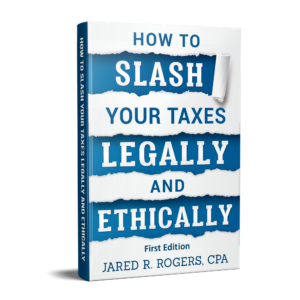
Click Above To Learn 111 Ways To Slash Your Tax Bill!