
Personal Service Corporations (PSC) and Taxation
Many people incorporate their businesses to shelter themselves from liability attributable to litigation. Likewise, one can enjoy graduated tax rates that are more favorable than those should one conduct their business as a sole proprietor. But did you know that if you have a C-Corp and perform certain services, you may be deemed a Personal Service Corporation (PSC) and taxed at a flat 35% tax rate?
The IRS and Congress typically take the stance that the decision to incorporate when made by a personal services business is primarily for tax avoidance or to gain a tax advantage. These include, but are not limited to, the graduated corporate tax rate, deducting business expenses that would otherwise be subject to the limitations on miscellaneous itemized deductions or the use of corporate retirement and fringe benefit plans. Thus, Congress passed laws to limit the benefits received by incorporated personal service businesses, most of which are unfavorable to the corporation.
A corporation is a PSC if three conditions are met:
- The compensation test states that if more than 20% if the total compensation costs attributable to personal services are performed by employee owners, you pass the test.
- The ownership test states that at least 95% of the corporation’s stock, by value, must be owned directly or indirectly by employees performing the services.
- The function test states that the corporations is a PSC if “substantially” all of the corporations activities involve the performance of services in the fields of health, law, engineering, architecture, accounting, actuarial science, performing arts or consulting.
If a corporation is deemed a PSC, there are three significant drawbacks:
- Graduated corporate tax rates often do not apply. Normally, corporate income tax rates range from 15 % to 39%. Unfortunately, PSCs pay a flat corporate rate of 35%. The good news is that only the first $100,000 of corporate profits get to benefit from these more favorable rates. Thus the maximum total tax “penalty” for being classified as a PSC is $12,750.
- The corporation cannot elect to have a fiscal year different from a calendar year without prior IRS approval. As a result, the corporation usually cannot elect to play games with the shareholder’s calendar tax year and its own (different) fiscal tax year.
- The at-risk rules and passive loss rules apply.
The PSC rules are a relic of the pre-1986 era. In those days, corporate rates were substantially-lower than personal income tax rates. For instance, in 1980 the top personal rate was 70%, while the top corporate rate was only 46%. Thus, a top-bracket taxpayer could reduce their taxes on the margin by over a third if they “incorporated themselves.” Congress wanted to disincentivize taxpayers from doing this, so the PSC restrictions were put into place.
As mentioned above, the maximum penalty for being deemed a PSC is a mere $12,750. Nonetheless, corporations that fall under PSC rules can take the following steps to prevent any possible re-characterization by the IRS:
- Consider electing S-corporation status. The PSC rules do not apply here or to LLCs. However, “reasonable compensation” requirements, odd health insurance rules, higher marginal rates, and stricter IRS scrutiny are the price you will pay.
- Diversify your corporation’s business activities. The rule is that 20% of your corporation’s compensation costs cannot come from personal services. So, ensure that at least 81% of your business’s compensation costs come from something other than these personal services. Another way of getting at this is to lower your compensation costs, and simply have the corporation perform pure business services.
- Bring in an outside investor. Have an unrelated person or persons purchase 6% or more of the corporate stock. Diversification has the added benefit of getting around the idea of your corporation’s “principal activity” being personal services.
Want $40? Our 2014 Referral Program!
Every year, we listen to what our clients tell us they like and what we should change. While we had a pretty decent referral program in the past, this year we’ve decided to go even bigger so to speak. This year we’re offering a program where the referrer can earn $40 for each and every client they send us; an unlimited number of times.
This is open to existing clients, new clients, friends and family of the practice – essentially anyone who respects us enough to send business our way. So no, you don’t actually have to be a “client” to earn money with us. However, you should probably send us an email with your contact info and the name of the person you are referring so we can send you your gift at the end of the season.
So why are we doing this? Well, all of the details can be found here, but the short answer is to reward those who think highly of us. If you’re willing put your reputation on the line by recommending our services, we’re willing to earn it, in more ways than one! But seriously, we want to give a little something back to those who continue to help us grow and move this practice forward. Besides, who couldn’t use more cash these days?
4 Ways People Get Into Trouble With the IRS
You don’t want to mess with the Internal Revenue Service. One small mix-up when handling your finances can cost you big.
For example, in recent years the IRS has increased its filing of levies, liens and wage garnishments. In fact, in 2010 alone, over 3 million levies were filed.
Look over this list of common ways people get into trouble with the IRS, and see if you fit any of them:
Filing too many allowances on your W4. An allowance determines how much income tax is withheld from your paycheck. The bigger the number listed, the more pay you will take home each check. So more is better right?
Not necessarily. If the kids just finished college and are no longer your dependents, if you’ve just gotten married, or if you’ve just got a huge raise at work then you PROBABLY need to review your allowances. Why? We’ll if you lose dependents, that will be less of a tax reduction on your return. If you didn’t have that extra tax withheld via your checks, you may find yourself owing big time. See this post to understand just how refunds/balances work.
Being unaware of taxes associated with the early withdrawal from certain retirement plans. If you withdraw from a retirement fund such as a 401(k) or IRA before you’re 59 1/2, you may face a 10 percent federal penalty on your investments, as well as a state penalty and an income tax on the money withdrawn.
Not paying enough taxes when self-employed. Many people who own their own businesses don’t know how much they have to pay in taxes. The tax structure for a self-employed person, what to pay, how to pay and what can be deducted, is decidedly complex, so it’s easy to become confused. In this post, we try to shed just a little light on it.
Not paying taxes on winnings. It is necessary to report all gambling winnings, including winnings from lotteries, casinos and horse races, as income.
For people who are in trouble with the IRS, there are various programs available that can provide debt relief if a taxpayer qualifies. If you are facing IRS debt, we can help you determine if you meet the requirements for one of these IRS programs. Our staff includes certified public accountants and other experts that offer tax services, financial planning, small business services and other assistance. To schedule an appointment to discuss your tax situation, please call 773.239.8850.
S-Corp Home Office Deduction
Taking the home office deduction is fairly simple when you’re a self-employed individual and file Schedule C. In those instances, you simply indicate on Form 8829 the percentage of your home that is used for work, the costs to maintain your space, and that amount will go on your Schedule C as a deduction.
If you are a member of a partnership or multimemeber LLC, then you use a similar calculation to the one listed above (see the worksheet on page 27). However, you deduct the expenses as unreimbursed partnership expenses on Schedule E.
But what if you’re a member of a S-Corp? Well, if you still want that home office deduction, just be prepared to do a few workarounds to get it.
25 years ago Congress enacted a law prohibiting the deduction of expenses related to the rental of a portion of one’s home to their employer. The law was enacted in response to a Supreme Court decision [Feldman v. Commissioner]. The rental arrangement involved was viewed as an attempt to circumvent the purpose of Internal Revenue Code Section 280A, which limits deduction of expenses allocable to the business use of one’s home.
Given that office-in-the-home expenses are not allowable if the office is rented to one’s employer, an S Corporation shareholder-employee “could” deduct office-in-the-home expenses as miscellaneous itemized deductions. But these deductions are of little or no value because of the 2% income floor imposed on Schedule A, and the add back of such deductions in computing alternative minimum taxable income.
Based on the above, the old workaround that was often used was:
- create a rental property on Schedule E of the individuals return, and include a portion of all expenses (rent, mortgage interest, property tax, insurance, utilities, etc). You would then report an amount of income that’s equal to;
- rent expense that you report on your S-Corp tax return. Those two amounts will offset (the rent deduction on your S-corp return and the rent income on your individual return); and you will be left with the home office deduction.
Well, the IRS got tired of sifting through fake rental properties and instead recommends that the employee submit an expense report as part of what’s called an “accountable plan.”
So based on this guidance, here is the new way of deducting home office expenses if you are a member of a S-Corp:
- Draft an accountable plan agreement for your company. It will outline what expenses are eligible for reimbursement, how they will be paid, etc. A sample plan can be found here, or you can create your own.
- Calculate the percentage of your home that is used exclusively for business purposes. Divide the square footage used for business by the total square footage of the home and multiply by 100.
- Calculate the total amount of eligible reimbursable expenses (see Form 8829 above). Multiply each amount by the percentage of business use calculated in the step above and enter the results on the expense form that you use for your accountable plan.
- Prepare expense reports as the employee and turn them in to your company on a regular basis. Attach receipts or other documentation to the form to substantiate them.
- Cut the check from the business account and deposit it into your personal account. Attach a copy of the check to the form as documentation that these were paid.
- Enter the amount of the payment into your S corporation’s records as a reimbursement for employee expenses. Post each expense claimed to the appropriate expense account so that these expenses may be deducted from the corporation’s income on its tax return.
And there you have it. You have now created a tax-deductible business expense for the S-corp, and you don’t have to report the reimbursement as income.
Could you be paying more in taxes than you should?
As a business owner, there are some tax benefits to being structured as a S-Corp. The biggest one (that almost everyone knows) is the potential to reduce/minimize their employment taxes. But did you know that through some deliberate and diligent tax planning, you could be able to legally reduce your tax burden further?
If your business does $100K (or more) in revenue, you would be a perfect candidate for our S-Corp Tax Reduction Analysis. This analysis (a package valued at $1097, but $345 to you for a limited time), includes the following:
- One hour investigative session to understand your business operations and potential tax levers
- Review of the past 3 years of filed Form 1120S tax returns to unearth potentially missed deductions or tax savings
- Formulation of potential tax strategies that if implemented could reduce the underlying tax liability
- Comprehensive report indicating findings, tax strategies and steps to implement
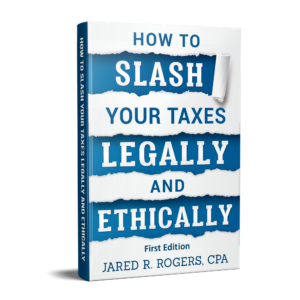
- Complementary copy of Jared’s book How to Slash Your Taxes Legally and Ethically
Furthermore, this analysis is guaranteed by our 100% ironclad money back guarantee. If we can’t find any tax savings that equal or exceed the cost of the analysis, we’ll refund your money, no questions asked!
To claim your analysis, simply email us via the address in the footer on this page or give our office a call at 773-239-8850. We only have capacity to perform so many of these analysis per month so get yours NOW. We look forward to working with you!
5 Quick Year End Tax Tips
So 2013 is ending in about 3 days and here you are wondering what you can do to cut your tax bill. Well, while most of your options are just about gone, here are 5 quick things to consider:
Do A Test Run of Your Tax Return
If possible, why not do a quick test run of your return? The year is almost done so you should have most of the information you need to come up with a projection. Sure, some of the numbers will need to be estimated, but the end result should yield a pretty good picture. With that picture in hand, you will know what moves you can or need to make before year’s end.
Pull Expenses Into 2013
Both individual and business returns tend to be prepared on a cash basis. Thus, if you can spend the money in 2013, you will get it to count on your return. Have some medical purchases (e.g. glasses, contacts, etc) that you were planning to make in January? Move them into December and they’ll be deductible on this years tax return. The same is true for that mortgage payment of yours. If the bank cashes the check in December, the mortgage interest will increase your deduction for this year.
Shift Income into 2014
Are you a self employed business person? Do you operate on a cash basis? Well, if you want to reduce your taxable income for 2013, why not consider billing your customers late or giving them a little grace period to pay so that the revenue hits your desk in 2014.
Make Those Last Minute Retirement Contributions
Do you have a company 401(K) account but haven’t contributed the Federal maximum of $17,500? Well, each dollar you contribute reduces your taxable income. Already received your last paycheck? Not to worry, you can still make a contribution to your IRA AND if you meet certain income limitations, you can shave a little off your tax bill. If you are self employed, you can make contributions to SEP and SIMPLE plans to receive a tax benefit on your return.
Give To Charity
Were you considering making a donation next year to a certain charitable organization? If so, consider making them in 2013 and you can reduce your taxable income. Have some items in your house that are taking up space? Why not give them to the Salvation Army, Goodwill or your other local charitable organization? You’ll be able to deduct the fair market value of the goods on your tax return and help out someone in need. Just make sure you follow these tips to get the most out of your donation.

Click above to watch our Money Management and Tax Chit Chat video series!

Click Above For Your Top Secret Guide To Tax Reduction, Business Success and Solving IRS Debt Problems!
Click Above To Learn 111 Ways To Slash Your Tax Bill!